
Shopify Statistics 2026: Revenue, Store Count and Growth Trends

By :
Jaclyn Donaldson
February 10, 2026

Over 5.8 million live stores now run on Shopify, processing a massive $292 billion in sales last year alone. That growth demands attention from every ecommerce brand and online seller.
We have gathered the latest Shopify Statistics for 2026 to help you benchmark your store performance and sharpen your marketing strategy.
These numbers cover conversion rates, mobile commerce trends, revenue benchmarks, and app ecosystem insights. Everything you need to see what actually works right now.
Top Shopify Statistics 2026 (At a Glance)
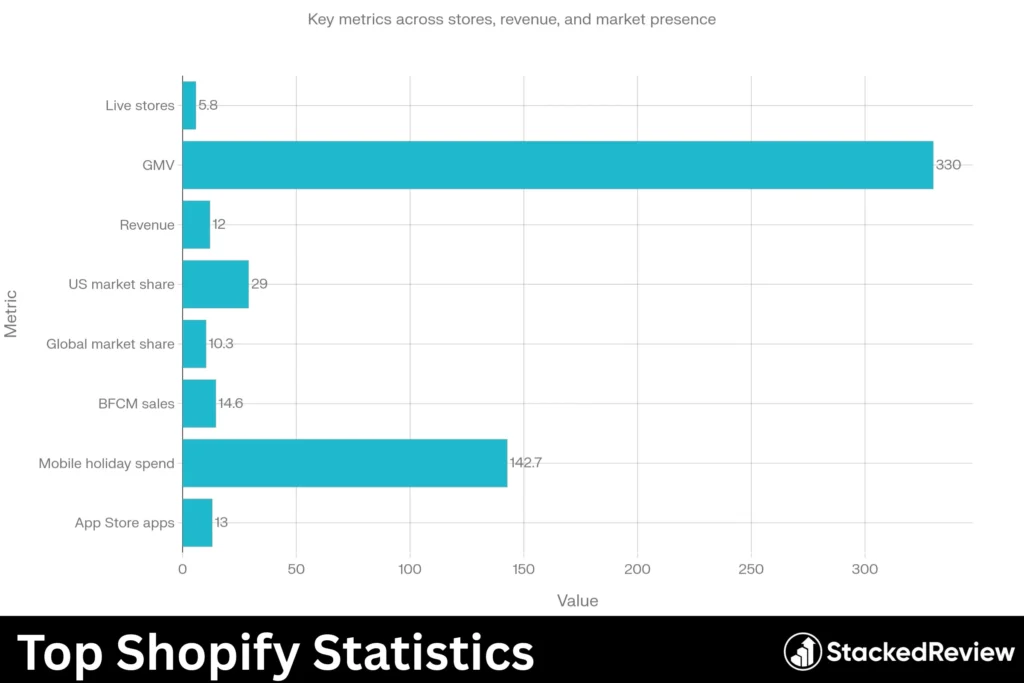
Shopify Store Count: The Explosive Growth Numbers
Understanding the sheer scale of Shopify store count helps contextualize the competition and opportunity for new merchants entering the ecosystem.
The Shopify user base is expanding rapidly beyond North America, making it a truly global interface for digital business.
Shopify Buyer Statistics Every Marketer Should Track
Understanding consumer behavior helps marketers optimise for the 675 million shoppers navigating these stores.
High repeat purchase rates and a massive user base make the platform a goldmine for customer retention strategies.
Shopify’s Billion-Dollar Revenue Breakdown for 2026
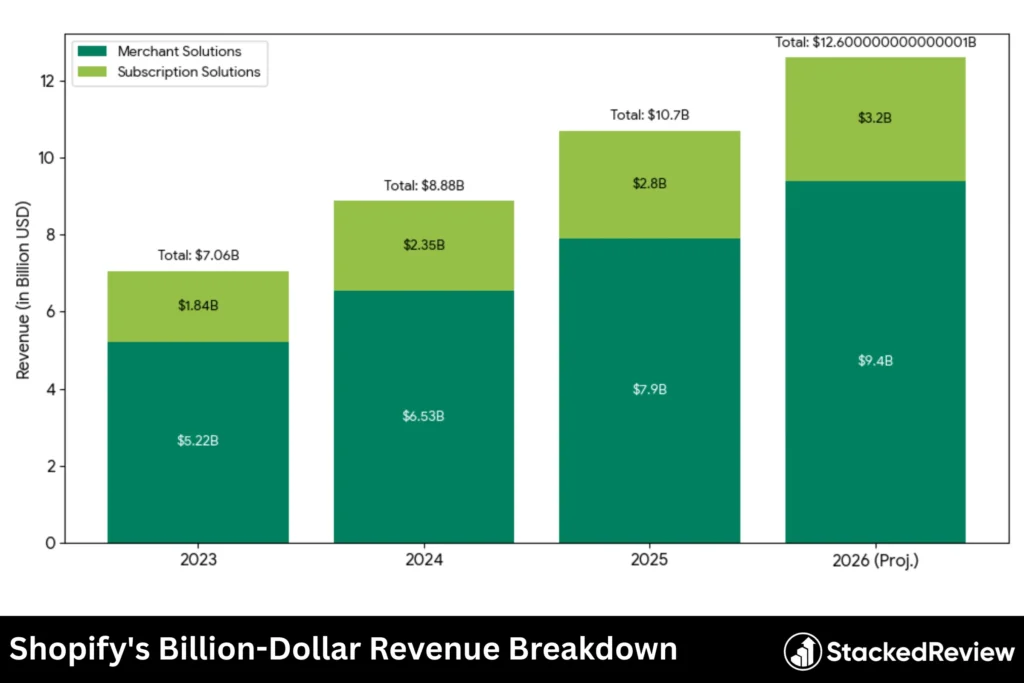
These figures reveal the financial health of the platform and the immense value flowing through its payment and merchant solution rails.
| Metric | 2023 | 2024 | 2025 | 2026 (Proj.) |
|---|---|---|---|---|
| Total Revenue | $7.06 Billion | $8.88 Billion | $10.6 Billion | ~$12.2 Billion |
| GMV | $235.9 Billion | $292.3 Billion | $335 Billion | ~$380 Billion |
| Merchant Solutions | $5.22 Billion | $6.53 Billion | $7.9 Billion | ~$9.4 Billion |
| Subscription Solutions | $1.84 Billion | $2.35 Billion | $2.8 Billion | ~$3.2 Billion |
Financials show that Shopify revenue is increasingly powered by usage-based transaction fees rather than flat monthly rentals.
Shopify Market Share by Region and Country
Shopify market share varies significantly by region, with dominance in English-speaking markets and rapid acceleration in Europe and APAC.
The data indicates a strategic pivot where international growth will be the primary driver of new merchant acquisition in 2026.
Shopify Mobile Traffic Data You Cannot Ignore
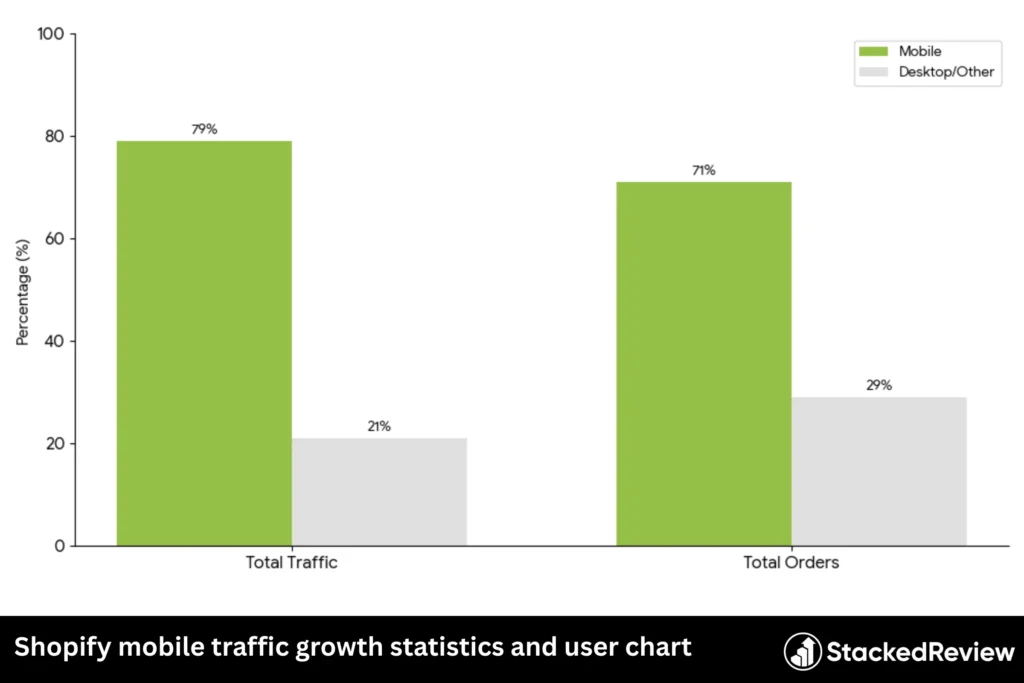
With mobile devices driving the majority of sales, mobile optimization is the single most critical factor for Shopify store success in 2026.
Merchants who neglect mobile-first design are effectively ignoring nearly three-quarters of their potential revenue.
Average Shopify Conversion Rate: Benchmarks for 2026
Benchmarks for Shopify conversion rates help you gauge whether your store is performing above or below the industry average.
Improving your checkout experience and page speed are the most reliable levers to push your conversion rate into the top percentile.
Most Popular Shopify Apps and Usage Trends
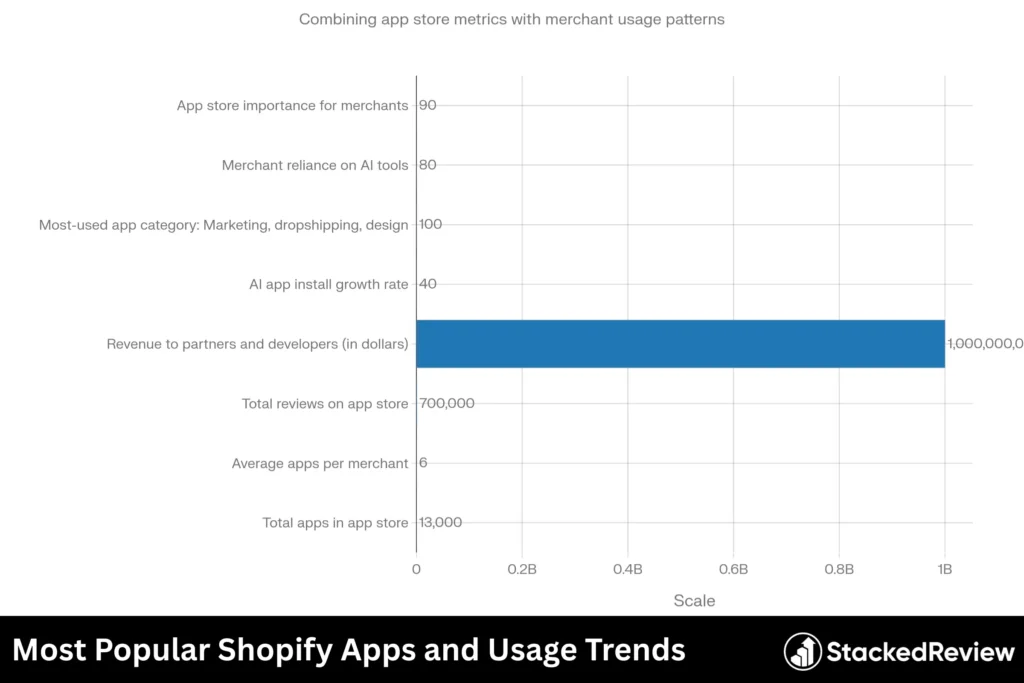
The Shopify App Store has evolved into a comprehensive marketplace offering tools that rival enterprise software suites.
Merchants are increasingly relying on AI-powered apps to automate low-value tasks and focus on strategy.
Shopify Plus Growth: Enterprise Adoption Hits 53K
Shopify Plus is rapidly stealing market share from legacy enterprise platforms like Salesforce Commerce Cloud and Magento.
- Plus Store Count: There are approximately 53,000 Shopify Plus stores live in 2026.
- Enterprise Brands: Major brands like Gymshark, Heinz, Staples, and Mattel run on Shopify Plus.
- Plus Revenue: Enterprise merchants contribute roughly 30% of Shopify’s monthly recurring revenue (MRR).
- B2B Growth: Shopify B2B features are now used by thousands of Plus merchants, with B2B ecommerce projected to reach 36 trillion dollars by 2026.
- Checkout Speed: Shopify Plus checkout is engineered to handle 40,000 checkouts per minute per store.
- Cost Savings: Brands migrating to Plus often report a 50% reduction in total cost of ownership (TCO) compared to legacy systems.
The shift to enterprise ecommerce is a major strategic focus for Shopify, driven by its new “Commerce Components” stack.
Payment Statistics: Why Merchants Choose Shop Pay
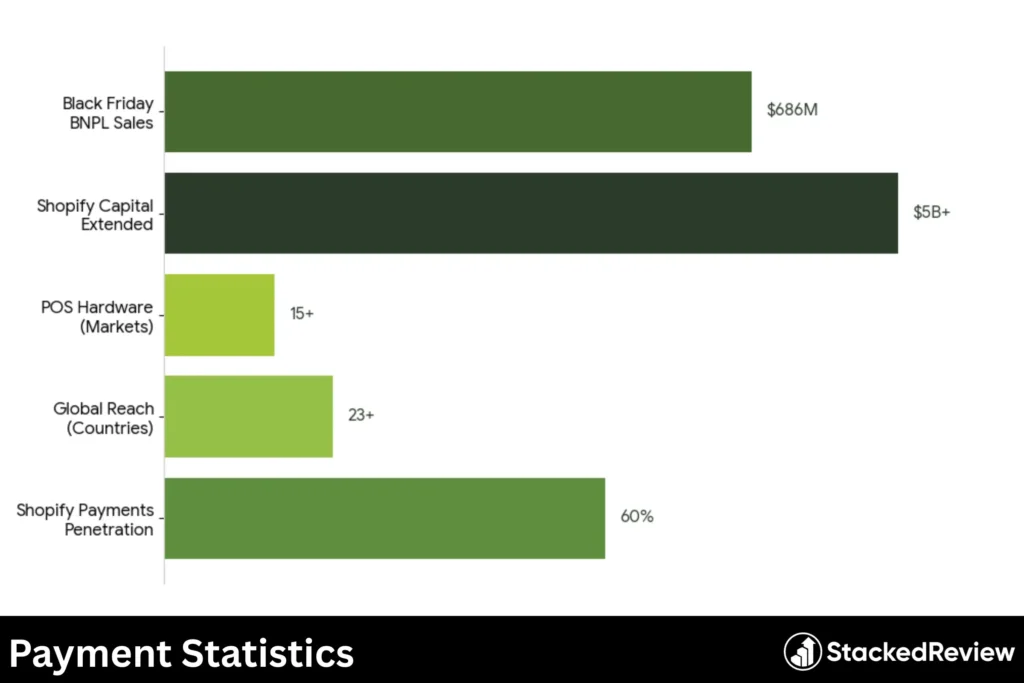
Shopify is quietly becoming one of the world’s largest fintech companies through its suite of financial products.
Embedded finance is the stickiest part of the Shopify ecosystem, making it difficult for merchants to leave once integrated.
Marketing Channels That Work Best for Shopify
For agencies and marketers, these Shopify SEO stats highlight where the traffic opportunities lie in 2026.
Winning in Shopify SEO now requires a focus on “Helpful Content” and robust schema markup for AI search engines.
How Shopify Stacks Up Against Top Competitors
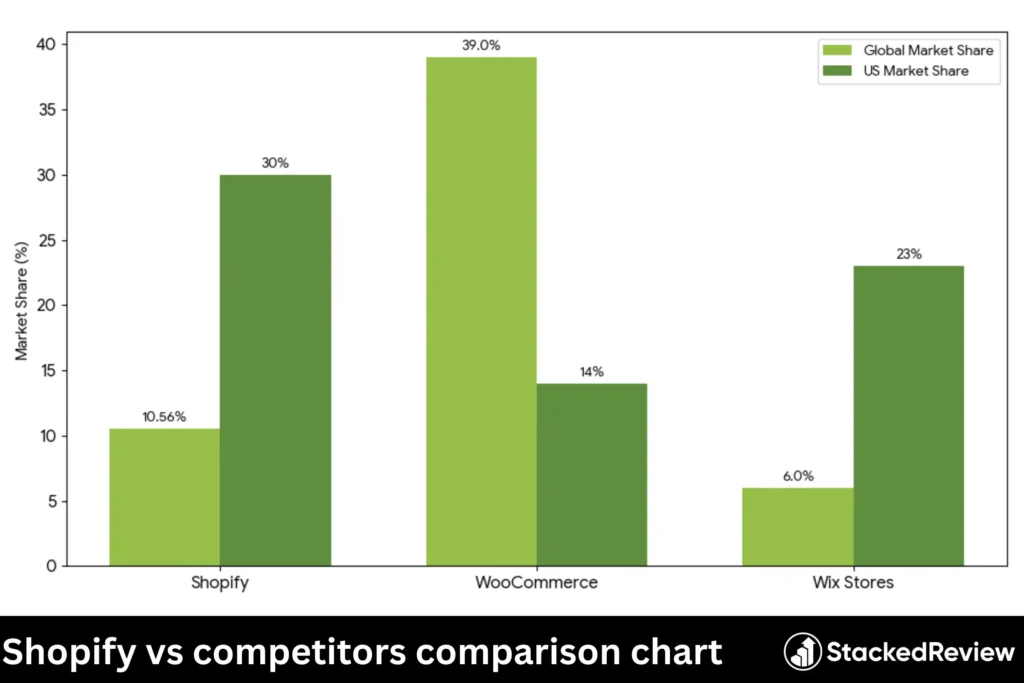
Benchmarking against WooCommerce and Wix reveals comparative strengths and weaknesses.
| Feature | Shopify | WooCommerce | Wix Stores |
|---|---|---|---|
| Market Share (Global) | 10.56% | 39% | 6% |
| Market Share (US) | 30% | 14% | 23% |
| Enterprise Focus | High (Plus) | Medium | Low |
While WooCommerce has more sites due to being free, Shopify captures more high-value commercial activity.
Best-Selling Product Categories on Shopify in 2026
Knowing which product niches perform best helps new merchants choose profitable markets.
- Top Category: Apparel and Fashion dominates with 540,000+ stores.
- Second Place: Home and Garden follows with approximately 221,000 stores.
- Beauty Sector: Beauty and Fitness ranks third, hosting 186,000+ active shops.
- Niche Growth: Food and Drink is one of the fastest-growing categories, now with 116,000+ stores.
- Digital Products: Sales of digital goods and online courses are rising, supported by specialized apps.
Fashion and Home Goods remain the bread and butter of the ecosystem, but consumables are gaining ground quickly.
Biggest Challenges Facing Shopify Merchants in 2026
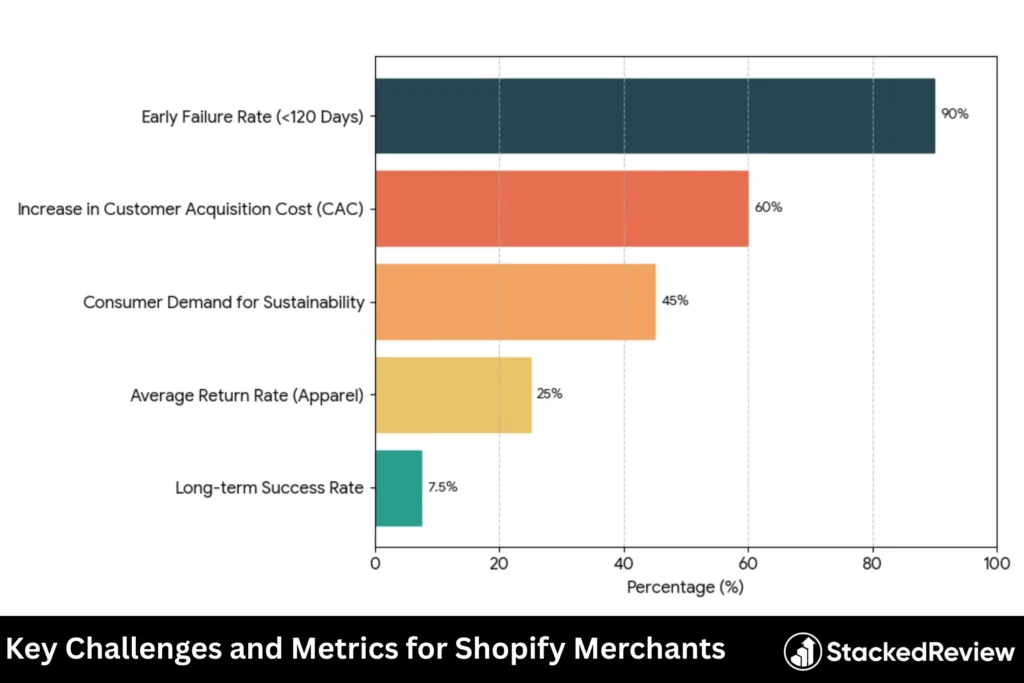
It is important to be realistic: ecommerce success is difficult, and the failure rate for new stores remains high.
Success on Shopify in 2026 demands not just a store, but a brand with a distinct audience and retention strategy.
AI, Social Commerce, and Shopify’s 2026 Roadmap
Looking ahead, these Shopify trends will define the platform’s evolution throughout the rest of 2026.
The future of Shopify is hybrid: blending online/offline, B2B/DTC, and human/AI workflows into a single unified operating system.
Conclusion: Benchmarking Your Store in 2026
Shopify is growing faster, processing more volume, and capturing more enterprise market share than ever before.
With 14.6 billion dollars in BFCM sales and a mobile-first buyer base, the opportunities are massive for merchants who adapt.
Key takeaways for your strategy:
By aligning your business with these Shopify statistics, you position your brand to ride the wave of global commerce growth in 2026 and beyond.

Affiliate Disclosure: This post may contain some affiliate links, which means we may receive a commission if you purchase something that we recommend at no additional cost for you (none whatsoever!)
Similar Posts






Verification process
Editorial standards
We’re a team of real users — not bots, not press-release copiers. Here’s exactly how we earn your trust on every single post.
We Actually Buy the Products
Every deal on this site is tested with a real purchase using our own accounts. We don’t rely on screenshots sent by vendors or press kits. If we say the discount works, we’ve clicked through checkout ourselves.
No Pay-to-Rank Policy
We never accept payment to feature or rank a deal higher. Affiliate commissions don’t influence our editorial scores — a bad deal stays ranked low regardless of commission size.
Monthly Re-Verification
Pricing changes fast. Our team re-tests every published deal at least once a month and immediately updates or removes any that have expired, changed, or been capped.
Expert Editorial Team
Our writers and editors have collectively spent 40,000+ hours hands-on with digital tools. We know what a fair price looks like — and we call out bad deals even when they’d earn us commissions.
Transparent Scoring Criteria
Every score is calculated from a public rubric: discount value, feature-to-price ratio, redemption ease, plan flexibility, and competitor comparison. No hidden weighting, ever.
Reader Feedback Loop
Thousands of readers report broken deals each month. Our team investigates every report within 24 hours and updates the page the same day a deal stops working.
Jaclyn Donaldson
Jaclyn is a content strategist at StackedReview with a passion for empowering small businesses. She specializes in dissecting social media advertising costs and hunting down the best-value deals. Her goal is to help brands stretch their budget further without compromising on results.