
UpCloud Review: Real Cloud Hosting Benchmarks and Pricing 2026

By :
Jaclyn Donaldson
February 10, 2026


As per our analysis in UpCloud Review, we would rate UpCloud at 4.7 out of 5. 💯
I’ll get straight to the point: UpCloud is one of my top picks for high performance cloud hosting and managed infrastructure when running marketing campaigns and SaaS products.
G2 Rating
Editor Rating
I’ve been using it for campaign hosting and tracking setups, and it has quickly become essential for fast cloud servers with zero cost egress and predictable pricing. 🚀
But as someone who manages multiple cloud servers for marketing ops, I’ve also tested various providers. So I understand what makes UpCloud effective for marketers, plus where it has trade offs.
If you are weighing your options to see if UpCloud fits your infrastructure needs, this review will help. My goal is to provide a complete examination, showing you the good and not-so-good parts of its managed services and pricing model. ⚡
UpCloud Explained: European Cloud Power for Businesses

UpCloud is a European cloud infrastructure provider that delivers IaaS solutions with focus on MaxIOPS storage technology and high performance compute.
Founded in Helsinki, it serves developers and businesses through 13 data centers across Europe, North America, Asia, and Australia with hourly billing and enterprise grade hardware.
Performance matters for campaigns, so UpCloud built infrastructure around speed and reliability for demanding workloads.
Key Aspects of UpCloud
| Aspect | Details |
|---|---|
| 📅 Founded year | 2011 |
| 📍 Headquarters location | Helsinki, Finland |
| 👔 Current CEO | Arno Schäfer appointed in 2025 |
| ⏱️ Uptime SLA | 99.999% guaranteed uptime |
| 🚀 Primary service | Infrastructure as a Service cloud hosting |
| 🌐 Global regions | Europe, North America, Asia, Oceania |
| 💵 Estimated revenue | Around $12.4 million annually |
| 💸 Total funding raised | $24.2 million in venture capital |
| 🎯 Target audience | Developers, SaaS teams, online businesses |
| 🔧 Core products | Cloud Servers, GPU Servers, Managed Databases, Object Storage |
| 🛡️ Security certifications | Tier III certified data centers with GDPR compliance |
UpCloud positions itself as a performance first alternative to large hyperscalers with simpler pricing and European roots. It serves businesses that need fast infrastructure without complex billing surprises.
Powerful Features That Set UpCloud Apart 🔑
UpCloud packs several features that make it attractive for web developers, startups, and enterprise businesses. Here are the standout elements you should know about.
MaxIOPS Storage Technology
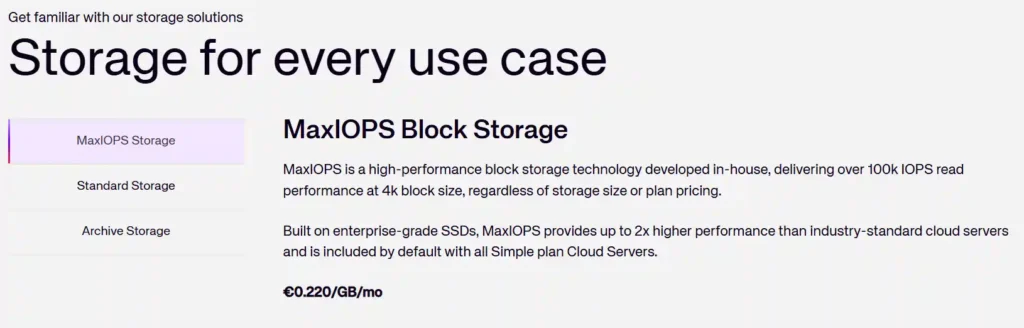
UpCloud developed its own storage architecture called MaxIOPS. Built entirely on SSD storage, it claims to be 2X faster than industry averages. For marketers running landing pages, e-commerce stores, or WordPress sites, faster storage means quicker page loads and better conversion rates.
Full Root Access and Control
Every cloud server comes with complete root access. You can install any software, configure firewalls, and customise environments to match exact requirements. Both Linux servers and Windows servers are supported.
99.999% Uptime SLA
UpCloud guarantees 100% uptime through its service level agreement. Every business-critical component includes N+1 redundancy. If downtime exceeds five minutes, UpCloud compensates customers 50X the affected amount.
Redundant infrastructure means your marketing campaigns stay live. No lost revenue from server crashes. No explaining to clients why landing pages went dark during peak hours.
Flexible Billing Options
UpCloud offers hourly billing for short-term projects and monthly plans for steady workloads. Starting at just $3.30 per month, entry costs remain accessible for freelancers and small businesses. A free 7-day trial lets you test infrastructure without committing payment details.
Global Data Centre Network

With 13+ data centres spread across Europe, North America, Asia, and Australia, UpCloud enables you to deploy servers close to your target audience. Lower latency means faster response times for visitors regardless of location.
45-Second Server Deployment ⚡
UpCloud deploys cloud servers in under 45 seconds. Select your configuration. Choose your data centre location. Launch.
No waiting hours for provisioning. No complex setup procedures. Your infrastructure scales at campaign speed.
Software-Defined Networking

SDN technology enables private networking between cloud servers at no extra cost. Create isolated environments for different clients or campaigns. Set up staging environments without third-party servers.
Marketers can test new campaign assets safely. Clone production servers in seconds. Roll out changes after thorough testing. All within UpCloud’s control panel.
Flexible Resource Allocation
UpCloud allows granular control over computing resources. Choose exact amounts of CPU cores, RAM, and storage. Scale individual components independently without upgrading entire packages.
Running lightweight tracking servers? Allocate minimal resources. Hosting video content for paid traffic? Add storage without paying for unnecessary CPU power. Resource flexibility matches marketing budgets to actual requirements.
API and Automation
Developers appreciate the powerful API access for automating deployments, scaling resources, and managing infrastructure programmatically. Integration with Terraform and other infrastructure-as-code tools simplifies DevOps workflows.
Complete Suite of Cloud Products and Services 💼
UpCloud provides a full suite of cloud products covering compute, storage, and networking needs. Let me break down each category.
Compute Products
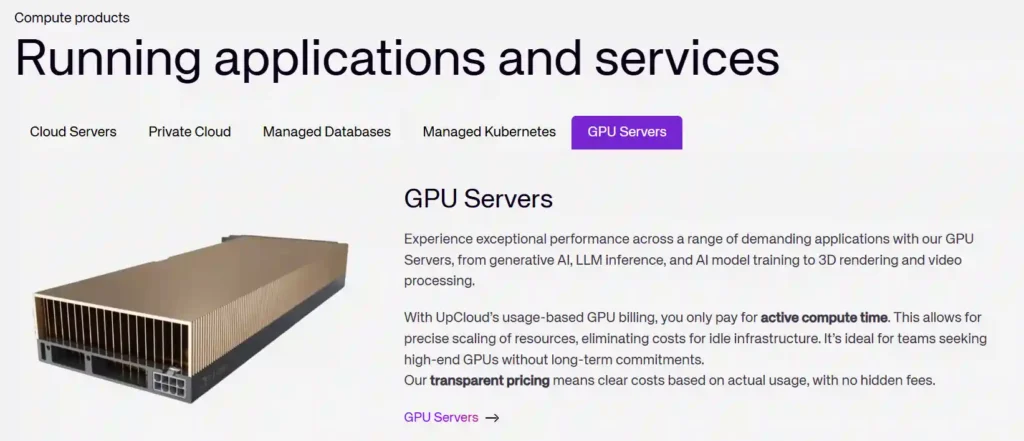
| Product | Description |
|---|---|
| Cloud Servers | Deploy high-performance Linux or Windows servers with full control and flexibility |
| GPU Servers | High-performance servers optimised for AI and machine learning workloads |
| Private Cloud | Isolated cloud infrastructure for security, control, and compliance requirements |
| Private Cloud GPUs | Dedicated GPU-enabled infrastructure within secure Private Cloud environments |
| Managed Kubernetes | Fully managed Kubernetes clusters for streamlined container orchestration |
| Managed Databases | Automated database hosting with backups, scaling, and monitoring included |
The GPU servers deserve special mention for marketers exploring AI-powered tools and machine learning applications. Training models locally gives more control than relying on third-party AI services.
Storage Products
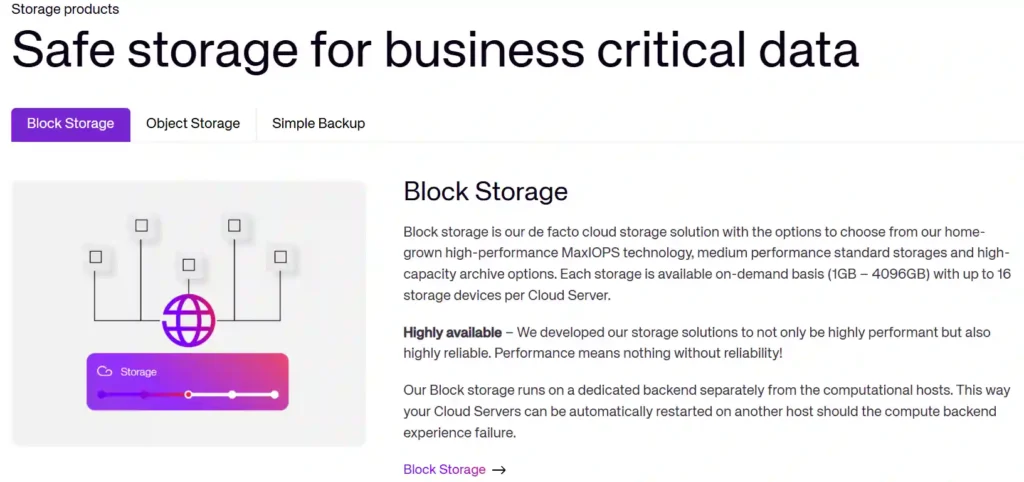
| Product | Description |
|---|---|
| Block Storage | High-speed persistent storage volumes for cloud server workloads |
| Simple Backup | Automated server backups with easy restore and scheduling options |
| Managed Object Storage | Durable, scalable storage for unstructured data like images and videos |
Simple Backup proves particularly valuable for agencies managing multiple client sites. Automated scheduling removes manual backup headaches and ensures data protection without constant oversight.
Networking Products
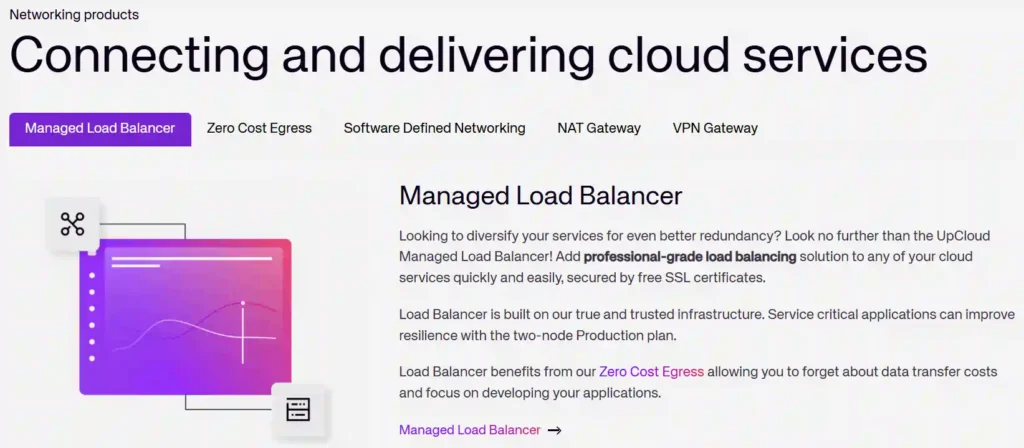
| Product | Description |
|---|---|
| Zero-cost Egress | Free outbound data transfers reducing total cloud costs |
| Software Defined Networking | Programmable network architecture for flexible traffic management |
| Managed Load Balancer | Distribute traffic across servers for performance and availability |
| VPN Gateway | Secure encrypted site-to-cloud or user-to-cloud connectivity |
| NAT Gateway | Provides outbound internet access to servers without public network connectivity |
The Managed Load Balancer becomes essential when scaling applications across multiple servers. Traffic distribution ensures no single server gets overwhelmed during peak periods.
Launch Your First Server in Six Easy Steps📝
- Step 1: Create Your Account
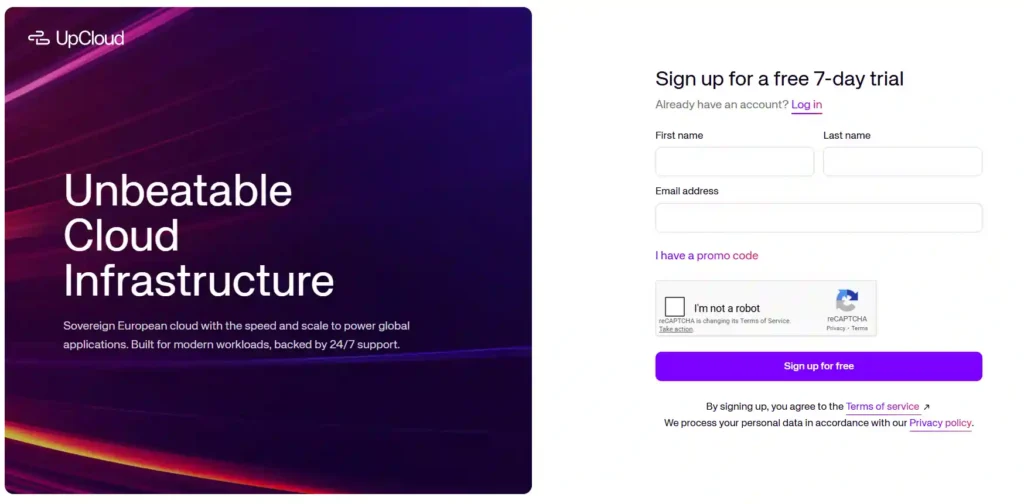
Visit the UpCloud website and sign up for an account. Provide basic details and verify your email. New accounts receive €25 in free credits to test the platform.
- Step 2: Add Payment Method
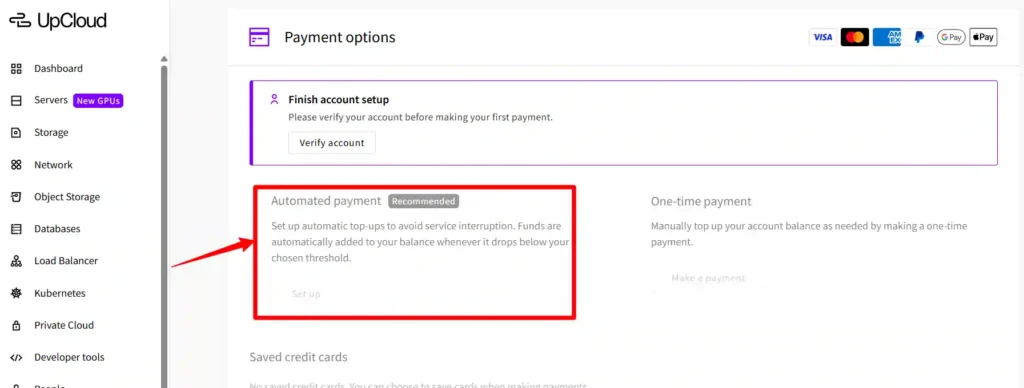
Add a credit card or configure your preferred payment method. UpCloud accepts major credit cards and PayPal.
- Step 3: Deploy Your First Server
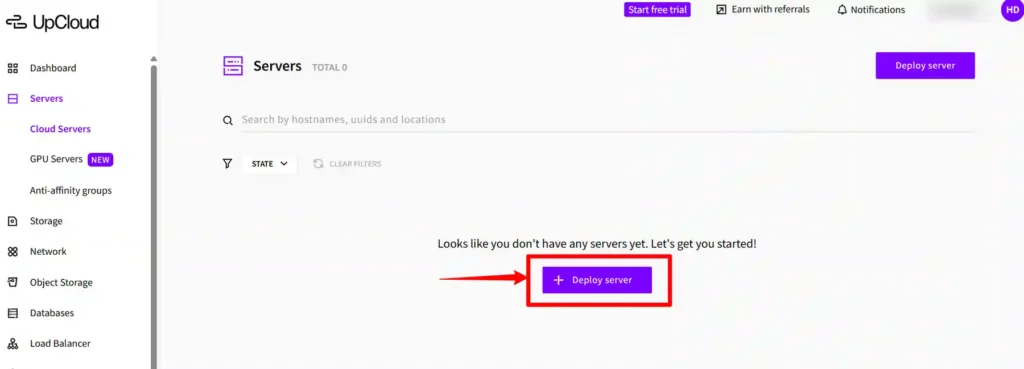
Go to the server deployment page. Select your preferred data centre location based on where your users are located. Choose a server plan matching your resource requirements.
- Step 4: Configure Server Settings
Select your operating system. UpCloud supports popular Linux distributions like Ubuntu, CentOS, Debian, and Rocky Linux. Windows Server options are also available. Configure SSH keys for secure access.
- Step 5: Launch and Connect
Click deploy and wait for your server to spin up. Typically takes under a minute. Connect via SSH using your private key. Your cloud server is ready for configuration.
- Step 6: Configure Firewall Rules
Set up firewall rules to protect your server. Allow only necessary ports. Block everything else. UpCloud makes firewall management straightforward through the control panel.
How Much Does UpCloud Actually Cost Users?💰
UpCloud uses transparent, hourly billing with monthly estimates. Here is a detailed look at pricing across product categories.
1. Cloud Server Pricing
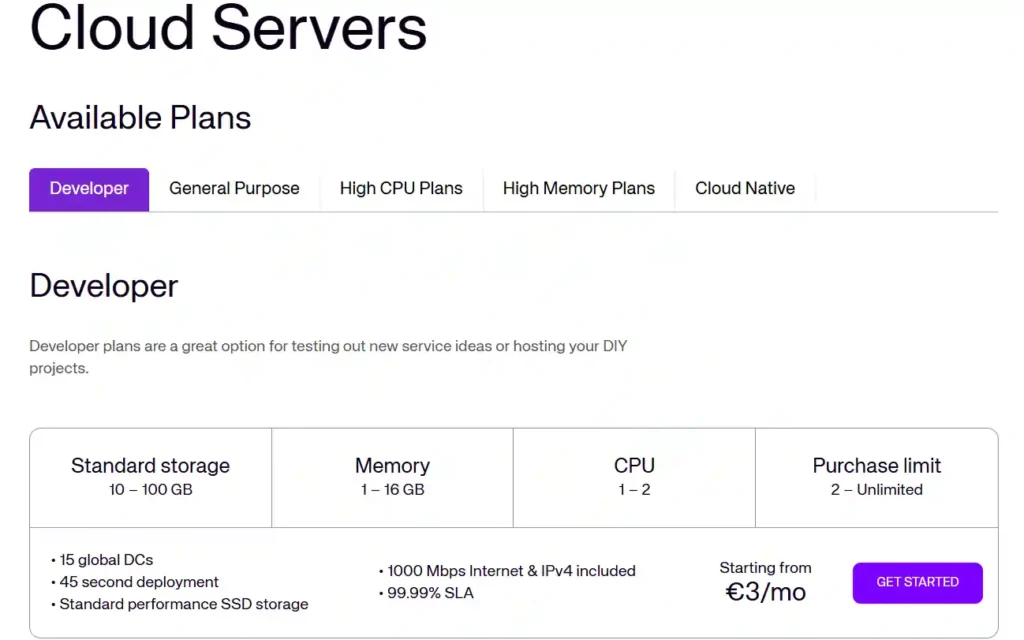
| Plan Type | Starting Price | CPU Cores | Memory | Storage |
|---|---|---|---|---|
| Developer | €3/mo | 1-2 | 1-16 GB | 10-100 GB Standard |
| General Purpose | €7/mo | 1-80 | 1-512 GB | 25-2048 GB MaxIOPS |
| High CPU | €130/mo | 8-64 | 12-128 GB | 100-300 GB MaxIOPS |
| High Memory | €40/mo | 2-24 | 8-512 GB | 100-700 GB MaxIOPS |
| Cloud Native | €12/mo | 1-80 | 4-512 GB | Flexible |
All plans include 1000 Mbps networking, IPv4 addressing, and transfer allowances.
2. GPU Server Pricing
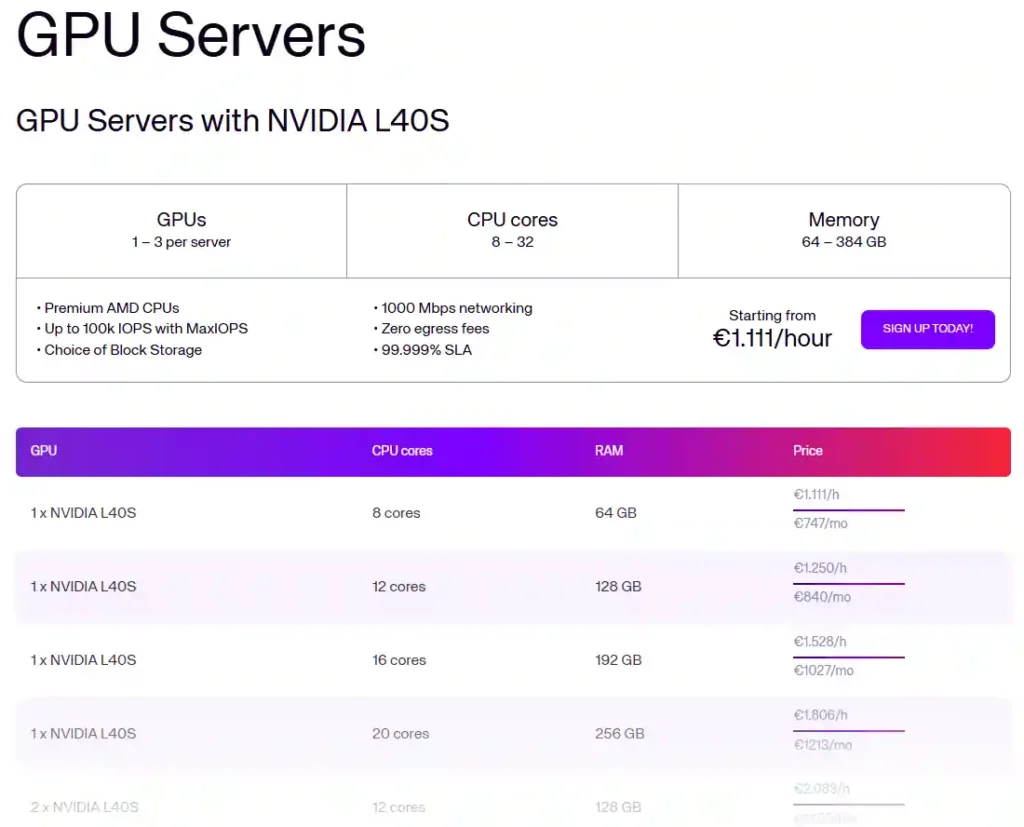
| GPU Configuration | CPU Cores | RAM | Price/Hour | Price/Month |
|---|---|---|---|---|
| 1 x NVIDIA L40S | 8 | 64 GB | €1.111 | €747 |
| 1 x NVIDIA L40S | 12 | 128 GB | €1.250 | €840 |
| 1 x NVIDIA L40S | 16 | 192 GB | €1.528 | €1027 |
| 2 x NVIDIA L40S | 12 | 128 GB | €2.083 | €1400 |
GPU configurations include MaxIOPS storage, zero egress fees, and 99.999% SLA.
3. Private Cloud Pricing
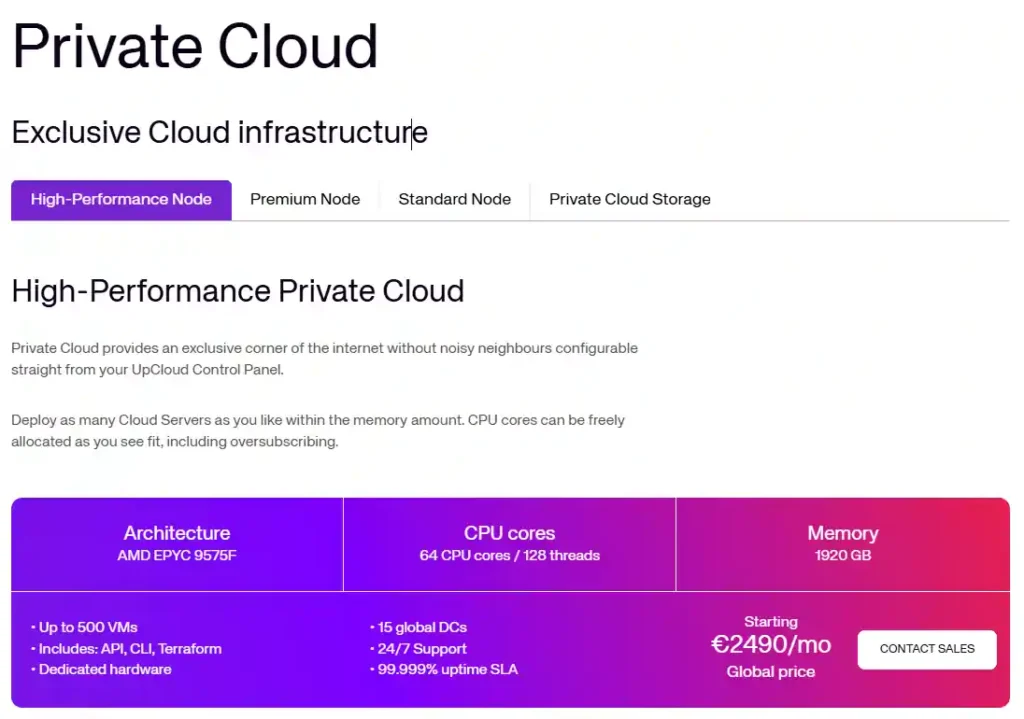
| Configuration | CPU Cores/Threads | Memory | Starting Price |
|---|---|---|---|
| High-Performance | 64/128 (EPYC 9575F) | 1920 GB | €2,490/mo |
| Premium | 64/128 (EPYC 9575F) | 1280 GB | €1,990/mo |
| Standard Host | 32/64 (EPYC 9355) | 640 GB | €1,690/mo |
Private Cloud includes dedicated hardware, 24/7 support, and 99.999% uptime SLA. Storage pricing remains separate based on the selected tier.
4. Managed Databases Pricing
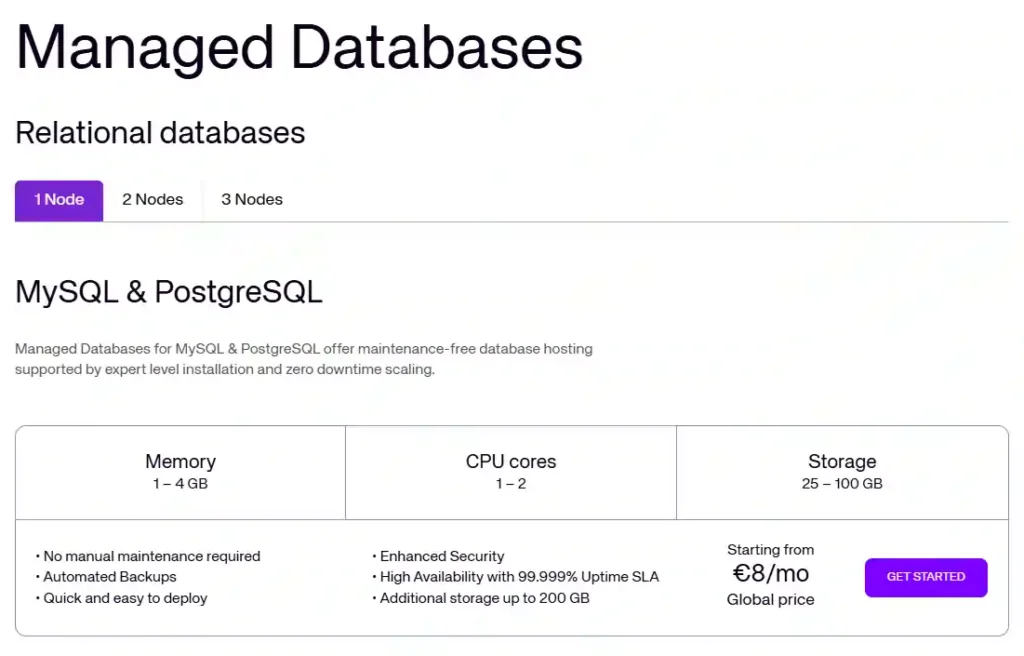
| Node Count | Memory Range | CPU Cores | Storage | Starting Price |
|---|---|---|---|---|
| 1 Node | 1-4 GB | 1-2 | 25-100 GB | €8/mo |
| 2 Node | 4-128 GB | 2-20 | 50 GB-2 TB | €100/mo |
| 3 Node | 4-128 GB | 2-20 | 100 GB-2 TB | €175/mo |
All database plans feature automated backups, zero-downtime scaling, and 99.999% SLA for multi-node setups.
5. Storage Pricing
| Storage Type | Global Price | Performance |
|---|---|---|
| MaxIOPS | €0.220/GB/mo | 100k read IOPS, 30k write IOPS |
| Standard | €0.085/GB/mo | 10k IOPS read/write |
| Archive | €0.056/GB/mo | 600 IOPS read/write |
Object Storage begins €5 monthly for 250GB with automatic scaling in 250GB increments.
Value Proposition
UpCloud pricing remains competitive against major providers while delivering superior performance. Zero egress fees alone save substantial amounts for high-traffic applications.
Combined with 100% uptime SLA and MaxIOPS technology, total cost of ownership favours UpCloud for performance-critical workloads.
UpCloud Data Centre Locations 🌍
Choosing the right data centre impacts latency and user experience. UpCloud operates facilities across multiple continents:
Europe remains UpCloud’s strongest region with data centres in Helsinki, London, Frankfurt, Amsterdam, Madrid, and Warsaw. European GDPR compliance makes UpCloud attractive for EU-focused businesses.
North America coverage includes data centres in New York, Chicago, San Jose, and other locations. West and East Coast options enable coast-to-coast coverage.
Asia-Pacific includes Singapore and Sydney data centres for serving Australian and Southeast Asian markets.
UpCloud Performance Benchmarks 📈
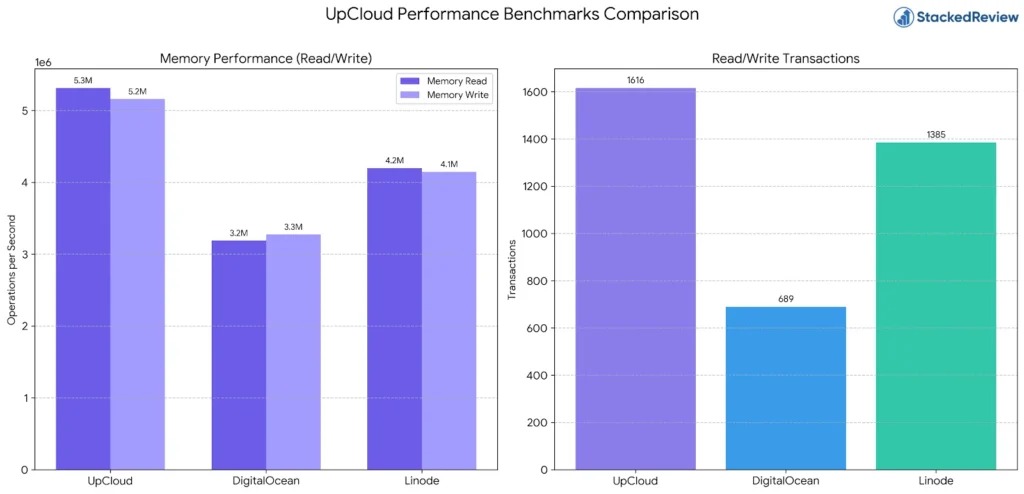
How does UpCloud actually perform? Let me share some benchmark data.
| Metric | UpCloud | DigitalOcean | Linode |
|---|---|---|---|
| Memory Read (ops/sec) | 5,313,870 | 3,188,746 | 4,198,139 |
| Memory Write (ops/sec) | 5,159,683 | 3,275,353 | 4,147,084 |
| Read/Write Transactions | 1,616 | 689 | 1,385 |
In memory read operations, UpCloud General Purpose plans achieved 5,313,870 operations per second. Compared to DigitalOcean at 3,188,746 ops/sec, UpCloud delivers noticeably faster performance.
For Redis operations, UpCloud maintains competitive speeds. SET operations clocked at 41,220 ops/sec while GET operations reached 44,111 ops/sec. Database-driven applications benefit from these speeds.
Memory write operations showed 5,159,683 operations per second on UpCloud balanced plans. Consistent write speeds matter for applications logging data or processing transactions.
Migrating to UpCloud Without Downtime or Hassle🔄
Private Cloud customers receive two months free migration assistance. Technical teams help plan transitions minimising disruption.
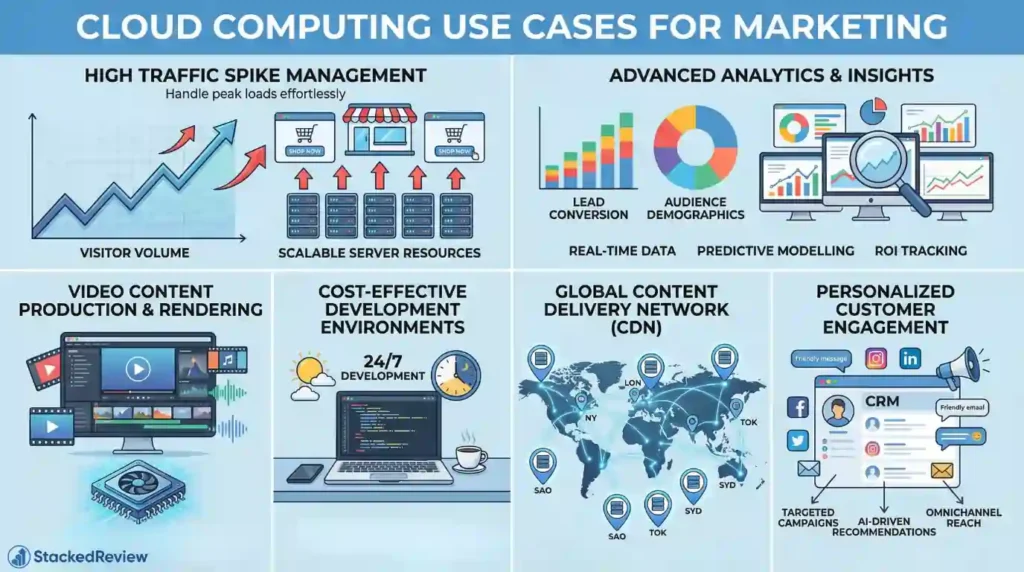
UpCloud Use Cases for Marketers 🎯
Security and Compliance Features 🔒
Security matters for businesses handling customer data. UpCloud addresses compliance requirements through several mechanisms.
Private Cloud offerings provide isolated infrastructure for organisations needing strict data separation. GDPR compliance comes standard with European data centre options, important for companies serving EU customers.
DDoS protection at network level helps mitigate volumetric attacks before reaching your servers. Combined with firewall configurations and VPN gateways, building secure architectures becomes straightforward.
ISO 27001 certification demonstrates commitment to information security management standards. Regular third-party audits verify controls remain effective.
What We Love and Dislike About UpCloud⚖️
Pros ✅
Cons ❌
What to Expect From UpCloud Customer Support🎧
Support responsiveness affects real-world experience. UpCloud provides 24/7 support through tickets and email.
Response times typically fall within a few hours for standard queries. Priority support options exist for enterprise accounts requiring faster resolution.
Documentation covers common tasks and configurations, though some advanced topics could use expansion. Community forums provide additional resources for troubleshooting issues.
No phone support is available, which may frustrate users preferring voice communication. However, written tickets create documentation trails useful for recurring issues.
How UpCloud Compares to Popular Cloud Alternatives🔄
| Feature | UpCloud | DigitalOcean | Vultr |
|---|---|---|---|
| Starting Price | €7/month | $6/month | $6/month |
| Free Trial | 7 days + €25 credit | $200 credit (60 days) | $100 credit (14 days) |
| Data Centres | 13+ | 15+ | 25+ |
| Uptime SLA | 100% | 99.99% | 100% |
| Free Egress | Yes ✅ | No ❌ | No ❌ |
| MaxIOPS Storage | Yes ✅ | No ❌ | No ❌ |
| Managed Kubernetes | Yes ✅ | Yes ✅ | Yes ✅ |
| GPU Servers | Yes ✅ | Yes ✅ | Yes ✅ |
| Windows Support | Yes ✅ | Yes ✅ | Yes ✅ |
DigitalOcean offers a larger community and more tutorials, making it friendlier for absolute beginners. Vultr provides more data centre locations and often wins pure performance benchmarks at similar price points. UpCloud wins on value when factoring zero-cost egress into total spending calculations.
Final Verdict on UpCloud 🏆
UpCloud earns strong marks across performance, reliability, and value. The platform handles demanding workloads efficiently while keeping costs predictable.
At €7 monthly for General Purpose plans with 99.999% uptime guarantees and zero egress fees, UpCloud delivers exceptional value for performance-focused marketing teams.
Rating: 4.7/5
With 13 global data centres, 45-second deployments, and round-the-clock support, UpCloud proves itself capable of serious marketing infrastructure. Is UpCloud worth trying for your next project?

Affiliate Disclosure: This post may contain some affiliate links, which means we may receive a commission if you purchase something that we recommend at no additional cost for you (none whatsoever!)
Similar Posts






Verification process
Editorial standards
We’re a team of real users — not bots, not press-release copiers. Here’s exactly how we earn your trust on every single post.
We Actually Buy the Products
Every deal on this site is tested with a real purchase using our own accounts. We don’t rely on screenshots sent by vendors or press kits. If we say the discount works, we’ve clicked through checkout ourselves.
No Pay-to-Rank Policy
We never accept payment to feature or rank a deal higher. Affiliate commissions don’t influence our editorial scores — a bad deal stays ranked low regardless of commission size.
Monthly Re-Verification
Pricing changes fast. Our team re-tests every published deal at least once a month and immediately updates or removes any that have expired, changed, or been capped.
Expert Editorial Team
Our writers and editors have collectively spent 40,000+ hours hands-on with digital tools. We know what a fair price looks like — and we call out bad deals even when they’d earn us commissions.
Transparent Scoring Criteria
Every score is calculated from a public rubric: discount value, feature-to-price ratio, redemption ease, plan flexibility, and competitor comparison. No hidden weighting, ever.
Reader Feedback Loop
Thousands of readers report broken deals each month. Our team investigates every report within 24 hours and updates the page the same day a deal stops working.
Jaclyn Donaldson
Jaclyn is a content strategist at StackedReview with a passion for empowering small businesses. She specializes in dissecting social media advertising costs and hunting down the best-value deals. Her goal is to help brands stretch their budget further without compromising on results.