Kling AI Pricing 2026: Cheapest Plan Starts at Just $6.99

By :
Jaclyn Donaldson
August 11, 2026
Kling AI pricing starts at $6.99 for the first month of Standard, while a free Basic option remains available for testing.
Kling AI combines video, image, audio, avatar, and effects creation inside one creative workspace for campaign production.
For SaaS marketers, Kling is most useful when video sits inside paid social, product launches, landing pages, feature campaigns, and short form demand generation.
The real buying decision is not simply the subscription fee. It is how quickly your Kling AI monthly credits disappear across campaign variants, revisions, higher quality generations, and client work.
Kling AI Pricing Key Takeaways for SaaS Marketers
Kling AI Subscription Plans and Current Pricing
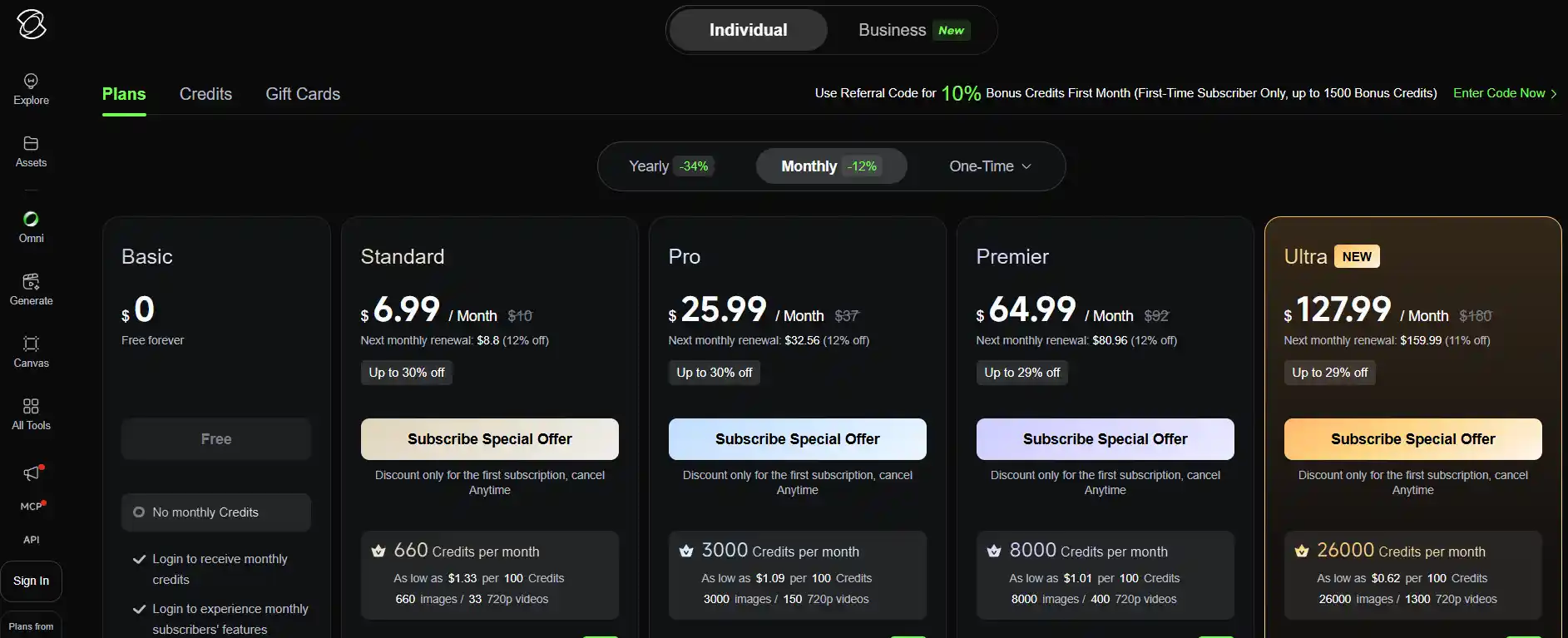
| Plan | First Subscription | Next Monthly Renewal | Annual Billing | Monthly Credits |
|---|---|---|---|---|
| Basic | $0 | $0 | $0 | Free login credits |
| Standard | $6.99 | $8.80 | $79.20/year | 660 |
| Pro | $25.99 | $32.56 | $293.04/year | 3,000 |
| Premier | $64.99 | $80.96 | $728.64/year | 8,000 |
| Ultra | $127.99 | $159.99 | $1,429.99/year | 26,000 |
The discounted first subscription price is useful for testing. However, we would budget against renewal pricing before adding Kling to a recurring campaign stack.
Annual billing lowers the effective rate further: about $6.60 monthly for Standard, $24.42 for Pro, $60.72 for Premier, and $119.17 for Ultra.
How Kling AI Credits Change Your Real Video Cost
Kling AI credit pricing matters because the same subscription can produce very different output volumes depending on model, duration, resolution, audio, and generation mode.
Kling’s standard plan maths works out to roughly 20 credits for a standard video generation. That makes 660 credits equal to about 33 standard generations.
However, SaaS marketing rarely stops at the first output. A paid ad may need five hooks, three visual angles, new aspect ratios, and several prompt revisions.
Therefore, your useful metric is not videos per month. It is usable campaign assets per month after testing, rejects, changes, and final exports.
Basic Plan: Best for Testing Before Campaign Spend
Basic costs $0 and gives new users a low risk way to test prompt quality, motion, image handling, and the general production flow.
We would use Basic for validation rather than ongoing SaaS promotion because the paid tiers remove practical limits that matter once content becomes customer facing.
For a SaaS team, Basic is the sandbox. Once generated clips enter ads, launch pages, lifecycle content, or sales material, a paid plan makes more sense.
Standard Plan: Low Cost Entry for SaaS Creatives
The Kling AI Standard plan costs $6.99 for the first subscription and renews at $8.80 per month. It includes 660 credits monthly.
Its annual option costs $79.20, equal to about $6.60 per month across the year.
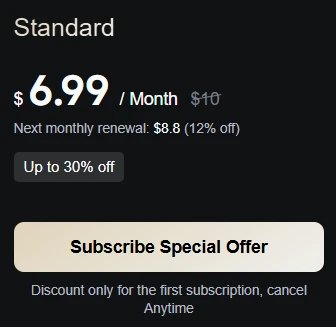
Standard fits a bootstrapped SaaS marketer making occasional launch clips, organic social videos, short feature teasers, or simple landing page visuals.
The limitation is testing room. One campaign with many revisions can burn through 660 credits quickly, especially when several concepts need to reach approval.
Pro Plan: Our Pick for Regular SaaS Campaigns
The Kling AI Pro plan starts at $25.99 for the first subscription and renews at $32.56 monthly. It raises capacity to 3,000 credits.
Annual billing costs $293.04, equal to about $24.42 per month.
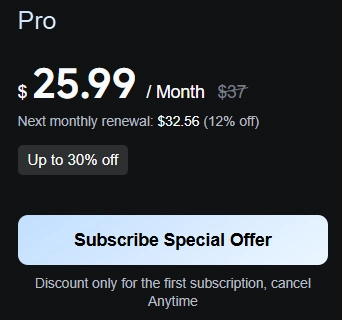
Pro is where Kling starts to fit a repeatable SaaS video marketing workflow. There is enough credit headroom for more hooks, variations, and revision cycles.
It suits teams producing product ads, onboarding clips, feature announcements, founder content, event promos, social experiments, and recurring campaign creative.
For StackedReview, this is the sensible starting tier once AI video becomes a weekly marketing input instead of an occasional experiment.
Premier Plan: Built for Higher Campaign Volume
The Kling AI Premier plan costs $64.99 initially and renews at $80.96 per month. It comes with 8,000 monthly credits.
The annual price is $728.64, bringing the monthly equivalent to $60.72.
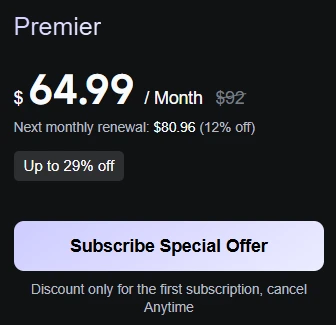
Premier fits SaaS companies running several campaign channels at once, especially when one team supports paid acquisition, organic social, sales enablement, and product marketing.
It can also fit small agencies producing AI video for multiple software accounts where approvals create more generation attempts than a single brand would need.
Ultra Plan: High Volume Credits for Production Teams
The Kling AI Ultra plan begins at $127.99 and renews at $159.99 monthly. It carries a much larger 26,000 credit monthly allocation.
Annual billing costs $1,429.99, equal to about $119.17 per month.
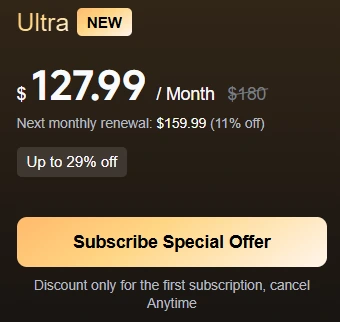
Ultra is not a default SaaS purchase. It makes sense when AI video is already tied to a large paid media calendar, agency production load, or ongoing creative testing programme.
At that point, the question is less about subscription price and more about the cost of production delays, exhausted credits, and moving work between tools.
First Month Discounts Versus Kling AI Renewal Pricing
This is the part SaaS buyers should watch closely. Kling’s headline monthly rates are discounted for the first subscription period.
Standard moves from $6.99 to $8.80, Pro from $25.99 to $32.56, Premier from $64.99 to $80.96, and Ultra from $127.99 to $159.99.
That does not make the plans poor value. It simply means Kling AI renewal pricing should be the number entered into recurring marketing forecasts.
If a campaign test lasts one month, the initial rate matters. If Kling becomes part of your quarterly creative plan, renewal or annual pricing matters more.
Is Kling AI Annual Pricing Worth Paying Upfront?
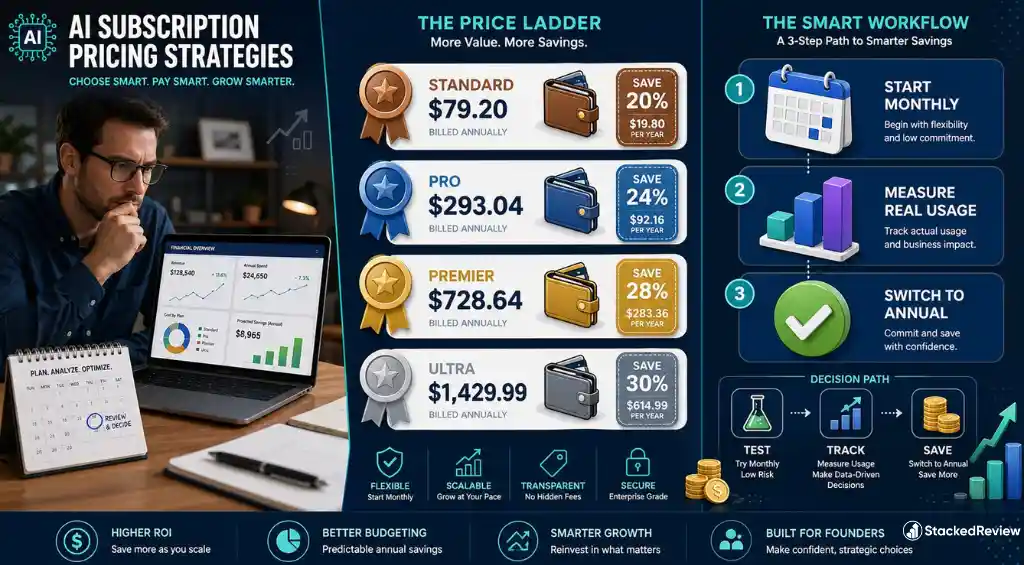
Annual billing works best after your team has already measured monthly credit use. Paying yearly before testing campaign fit can lock budget into unused capacity.
Standard costs $79.20 yearly, Pro costs $293.04, Premier costs $728.64, and Ultra costs $1,429.99.
For established usage, the annual rates are attractive because they reduce the effective monthly cost and make AI production spend easier to forecast.
For a new SaaS workflow, we would start monthly, record actual credit burn for one full campaign cycle, then switch only after usage becomes predictable.
Which Kling AI Plan Fits Each SaaS Marketing Stage?
SaaS marketing teams should choose a plan based on campaign frequency, not company headcount. A small paid media team can use more credits than a larger content department.
Kling AI Pricing Compared With Three Top Competitors
| Platform | Paid Starting Price | Included Capacity | Best Pricing Fit |
|---|---|---|---|
| Kling AI | $6.99 first subscription | 660 credits on Standard | Kling focused video production |
| Runway | $15 monthly or $12 annually | 625 credits on Standard | Broader creative model access |
| Pika | $10 monthly | 700 credits on Standard | Short form video experimentation |
| Luma AI | $30 monthly | 10,000 credits on Plus | Higher credit pools and multi model work |
Credit counts are not directly comparable because each platform prices generations differently. A 700 credit allowance on one service is not equal to 700 Kling credits.
Kling has the lowest paid entry price in this group during its first subscription offer, which is useful for testing a SaaS video campaign without a large starting commitment.
Runway costs more at entry but packages a wider set of creative models. Pika keeps its paid starting point close to Kling, while Luma starts higher.
For SaaS marketers, compare the cost of the exact output you need: video length, resolution, revisions, model access, commercial rights, and monthly production volume.
How to Budget Kling AI for Paid Campaign Testing
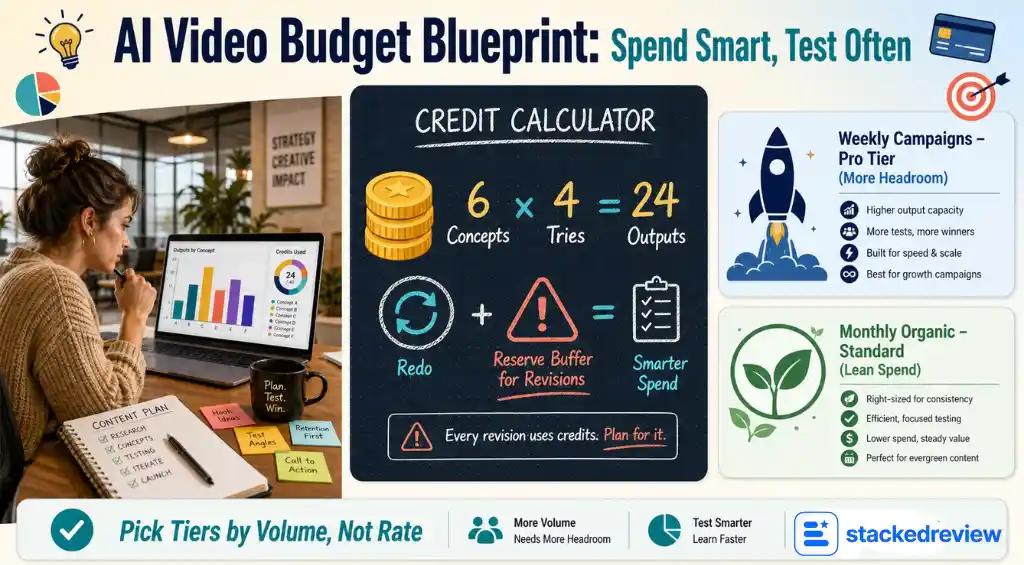
Start with your monthly creative requirement, then work backwards into credits. Do not choose a tier only because its per credit rate looks cheaper.
If one campaign needs six concepts and each concept takes four attempts, you already have 24 generations before resizing, alternate scenes, or stakeholder changes.
Add a credit buffer for rejected outputs. Generative video production is rarely a one prompt process, especially when brand accuracy and product details matter.
For a SaaS team with weekly tests, Pro gives more breathing room. For a few monthly organic clips, Standard may remain the cleaner spend.
StackedReview Recommendation for SaaS Marketing Teams

We recommend Pro for most SaaS marketers who plan to use Kling every week. Its 3,000 credits create a healthier testing allowance without jumping into agency level spend.
Standard is better when AI video is still being validated. Premier becomes attractive once several marketing channels compete for the same credit pool.
Ultra should be bought from measured demand, not ambition. If your previous month never came close to Premier’s limit, paying for 26,000 credits adds little value.
FAQs About Kling AI Pricing
How do Kling AI monthly credits expire?
Subscription credits follow the active billing cycle, so teams should schedule generation before renewal and avoid leaving unused campaign capacity sitting idle at month end.
Does Kling AI support commercial SaaS campaigns?
Paid memberships include commercial usage rights, making them suitable for SaaS ads, landing pages, product launches, social campaigns, and customer facing marketing video assets at scale.
Which Kling AI plan handles batch generation?
Premier or Ultra fits heavier batch work because their larger monthly credit pools support more variations, revisions, campaign concepts, and recurring production requests each month.
Can Kling AI credits cover 4K exports?
Paid plans include higher resolution and 4K generation options, but credit use still varies with the selected model, clip duration, quality settings, audio, and generation mode.
How does Kling AI renewal pricing work?
The first subscription receives a promotional rate, then monthly billing rises to the listed renewal amount unless you cancel or move to annual billing instead.
Is Kling AI annual billing better financially?
Annual billing lowers the effective monthly rate, but it works best after your team confirms consistent credit usage across several real SaaS marketing campaigns first.
Final Verdict: Is Kling AI Pricing Worth It?
Kling’s strongest pricing advantage is choice. A SaaS marketer can test cheaply, scale into 3,000 or 8,000 credits, then move higher only when production proves the need.
Our preferred buying path is simple: test Basic, use Standard for early campaign validation, and move to Pro once weekly creative production becomes consistent.
That approach keeps software spend tied to actual campaign output instead of paying for a large credit balance your team may never use.
For teams already producing video at scale, Premier and Ultra can reduce credit pressure and keep more campaign work inside one production account.

Affiliate Disclosure: This post may contain some affiliate links, which means we may receive a commission if you purchase something that we recommend at no additional cost for you (none whatsoever!)
Similar Posts

Verification process
Editorial standards
We’re a team of real users — not bots, not press-release copiers. Here’s exactly how we earn your trust on every single post.
We Actually Buy the Products
Every deal on this site is tested with a real purchase using our own accounts. We don’t rely on screenshots sent by vendors or press kits. If we say the discount works, we’ve clicked through checkout ourselves.
No Pay-to-Rank Policy
We never accept payment to feature or rank a deal higher. Affiliate commissions don’t influence our editorial scores — a bad deal stays ranked low regardless of commission size.
Monthly Re-Verification
Pricing changes fast. Our team re-tests every published deal at least once a month and immediately updates or removes any that have expired, changed, or been capped.
Expert Editorial Team
Our writers and editors have collectively spent 40,000+ hours hands-on with digital tools. We know what a fair price looks like — and we call out bad deals even when they’d earn us commissions.
Transparent Scoring Criteria
Every score is calculated from a public rubric: discount value, feature-to-price ratio, redemption ease, plan flexibility, and competitor comparison. No hidden weighting, ever.
Reader Feedback Loop
Thousands of readers report broken deals each month. Our team investigates every report within 24 hours and updates the page the same day a deal stops working.
Jaclyn Donaldson
Jaclyn is a content strategist at StackedReview with a passion for empowering small businesses. She specializes in dissecting social media advertising costs and hunting down the best-value deals. Her goal is to help brands stretch their budget further without compromising on results.