SaaS Affiliate Marketing Statistics: Benchmarks and Trends (2026)

By :
Jaclyn Donaldson
June 12, 2026

SaaS affiliate marketing in 2026 looks promising: bigger software budgets, higher recurring payouts, and more buyers checking reviews before swiping company cards.
Global SaaS revenue sits in the hundreds of billions, with one 2026 market number placing SaaS at $375.57 billion for 2026.
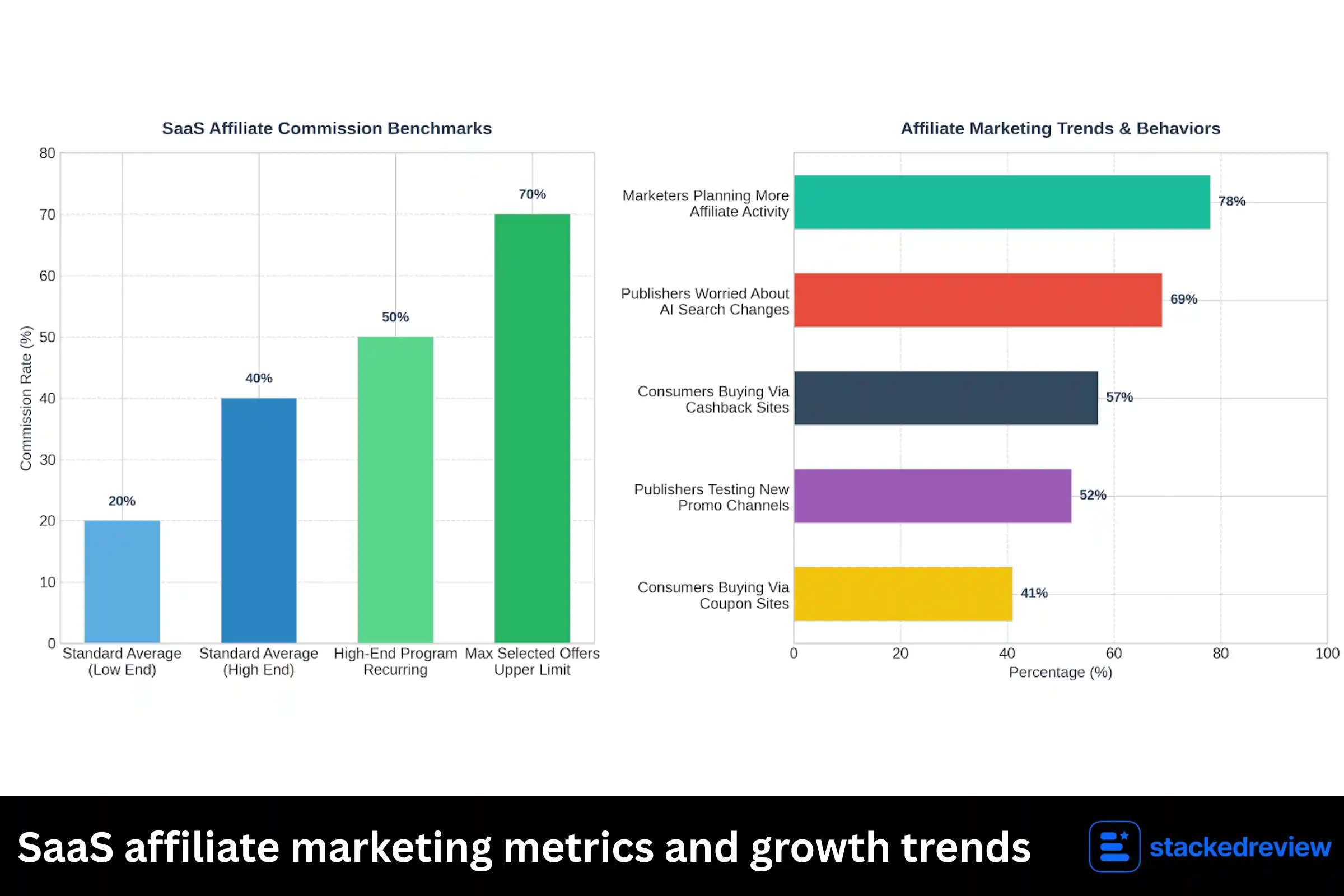
Affiliate commissions in SaaS often sit around 20% to 40%, while some programmes push up to 50% recurring.
So yes, SaaS affiliate marketing statistics are not just “nice numbers”. They show a real money channel where review sites, creators, email lists, comparison pages, and partner-led funnels can print long-term revenue when done right.
SaaS Affiliate Marketing Statistics 2026: Key Numbers First
Let’s start with quick stats. No fluff. No sleepy intro. Just numbers you can use in your 2026 content plan.
| SaaS affiliate marketing metric | 2026 number to know |
|---|---|
| Global SaaS market size | $375.57 billion in 2026 |
| Global software spending | $1.43 trillion in 2026 |
| SaaS market growth rate | 18.7% CAGR from 2026 to 2034 |
| Common SaaS affiliate commission | 20% to 40% average range |
| High-end SaaS recurring commission | Up to 50% recurring in some programmes |
| Wider SaaS commission range | 20% to 70% across selected SaaS offers |
| SaaS affiliate EPC range | $1.20 to $3.50 per click |
| US affiliate investment benchmark | $13.62 billion in 2024 |
| US ecommerce sales from affiliate marketing | $113 billion in 2024 |
| Share of US ecommerce from affiliate | 9.4% in 2024 |
| Marketers planning more affiliate activity | 78% |
| Consumers buying through cashback sites | 57% |
| Consumers buying through coupon sites | 41% |
| Publishers worried about AI Overviews and search changes | 69% |
| Publishers testing new promo channels | 52% |
Those numbers explain why recurring affiliate commissions matter so much in SaaS. A single sale can pay again next month, next year, or until a customer cancels.
SaaS also has better maths than many one-time ecommerce offers. A $99 per month tool at 30% recurring gives $29.70 per month per active customer. Ten active users can become $297 per month. One hundred active users can become $2,970 per month.
That recurring layer changes content value. A ranking article, product review, or comparison page can keep earning long after first published.
Why SaaS Affiliate Marketing Looks Bigger In 2026
SaaS sits inside a much larger software buying cycle. Global software spending has a 2026 number of $1.43 trillion, which gives SaaS brands more room to chase partner-led growth.
At the same time, SaaS market size has been placed at $375.57 billion for 2026, with growth expected through 2034. Bigger SaaS spend means more competition. More competition means brands need cheaper acquisition.
That opens space for B2B SaaS affiliate marketing. Paid ads can burn cash fast. Affiliate marketing pays after clicks, leads, trials, or sales. SaaS founders like that because it makes risk easier to control.
Affiliate marketing also fits how people buy software. Buyers compare pricing. They read reviews. They ask creators. They search for “best tool for X” and “Tool A vs Tool B”.
That search behaviour gives content publishers a real edge. A strong review page can sit between buyer intent and checkout.
Here’s a simple 2026 model StackedReview would use when sizing SaaS affiliate opportunity.
| 2026 Working Model | Conservative read | Strong read |
|---|---|---|
| SaaS market used as base | $375.57 billion | $375.57 billion |
| Affiliate-influenced SaaS revenue share | 3% | 5% |
| Affiliate-influenced SaaS revenue | $11.27 billion | $18.78 billion |
| Average partner payout range | 20% | 40% |
| Possible affiliate payout pool | $2.25 billion | $7.51 billion |
| Best use case | Review SEO, newsletters | Review SEO, creators, paid media |
Treat these as StackedReview working numbers, not official market totals. They are built from current SaaS market size and common SaaS commission ranges.
Even at a cautious 3% influence rate, partner content can touch more than $11 billion in SaaS sales. That makes SaaS affiliate programmes a serious channel, not a side quest.
SaaS Commission Rates In 2026
SaaS affiliate payouts often beat ecommerce because software has better margins. Digital products do not need warehouses, shipping, or physical stock.
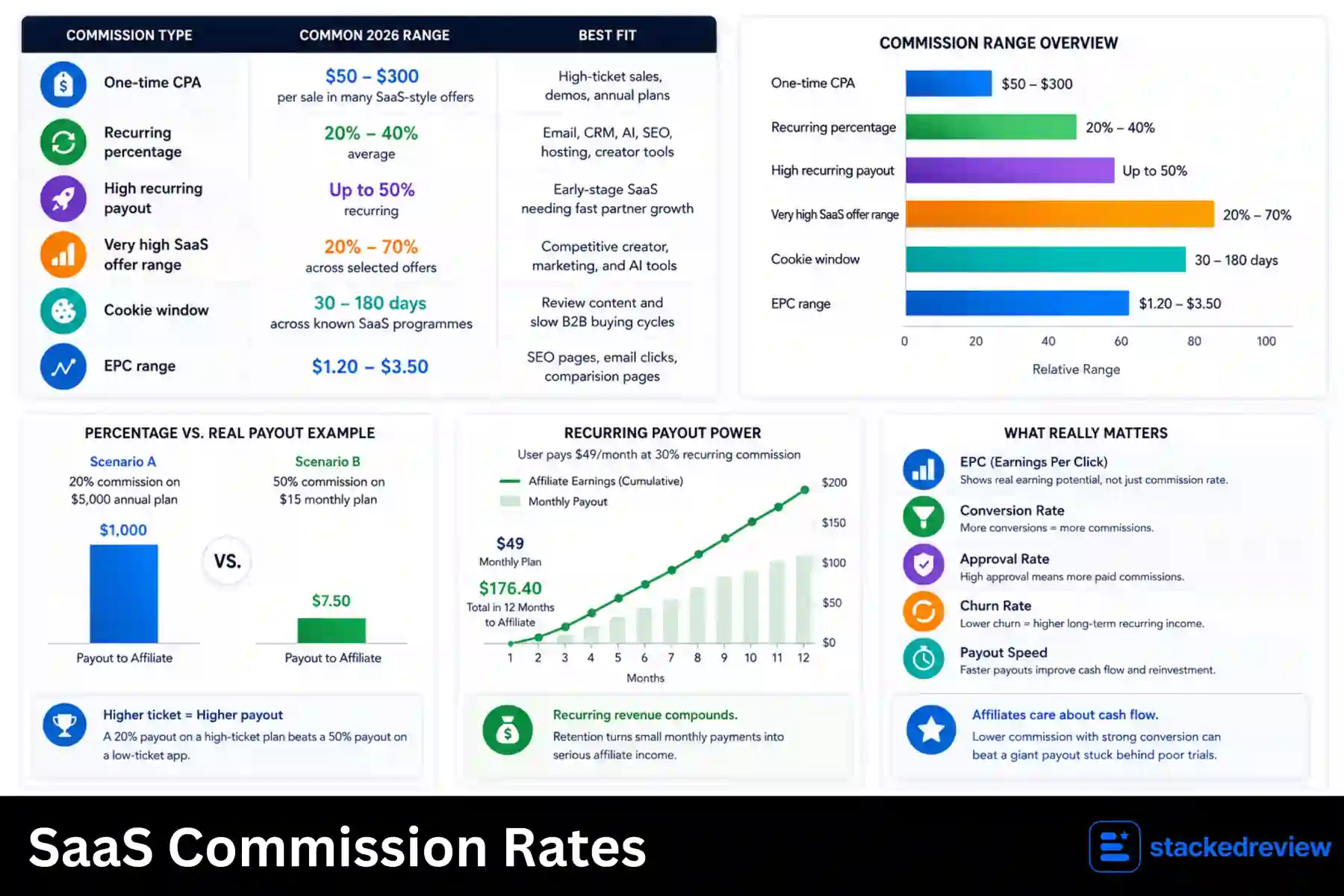
Average SaaS commissions sit around 20% to 40%, and some programmes pay up to 50% recurring. A wider scan of SaaS offers shows commissions ranging from 20% to 70% in selected programmes.
That range matters. A 10% commission can still work on enterprise tools. A 40% commission can work on creator SaaS, AI tools, email tools, and marketing platforms.
| Commission type | Common 2026 range | Best fit |
|---|---|---|
| One-time CPA | $50 to $300 per sale in many SaaS-style offers | High-ticket sales, demos, annual plans |
| Recurring percentage | 20% to 40% average | Email, CRM, AI, SEO, hosting, creator tools |
| High recurring payout | Up to 50% recurring | Early-stage SaaS needing fast partner growth |
| Very high SaaS offer range | 20% to 70% across selected offers | Competitive creator, marketing, and AI tools |
| Cookie window | 30 to 180 days across known SaaS programmes | Review content and slow B2B buying cycles |
| EPC range | $1.20 to $3.50 | SEO pages, email clicks, comparison pages |
High ticket SaaS affiliate programmes can look less exciting on percentage, yet pay more per sale. A 20% payout on a $5,000 annual plan beats a 50% payout on a $15 monthly app.
Recurring payout still wins when retention stays high. A user paying $49 per month can produce $176.40 in partner income over 12 months at 30% recurring.
That is why affiliate managers should not sell only “commission rate”. They should sell EPC, conversion rate, approval rate, churn rate, and payout speed.
Affiliates care about cash flow. A lower commission with strong conversion can beat a giant payout stuck behind poor trials.
What Affiliates Actually Earn From SaaS
SaaS affiliate earnings depend on five numbers: traffic, click-through rate, trial conversion, paid conversion, and commission value.
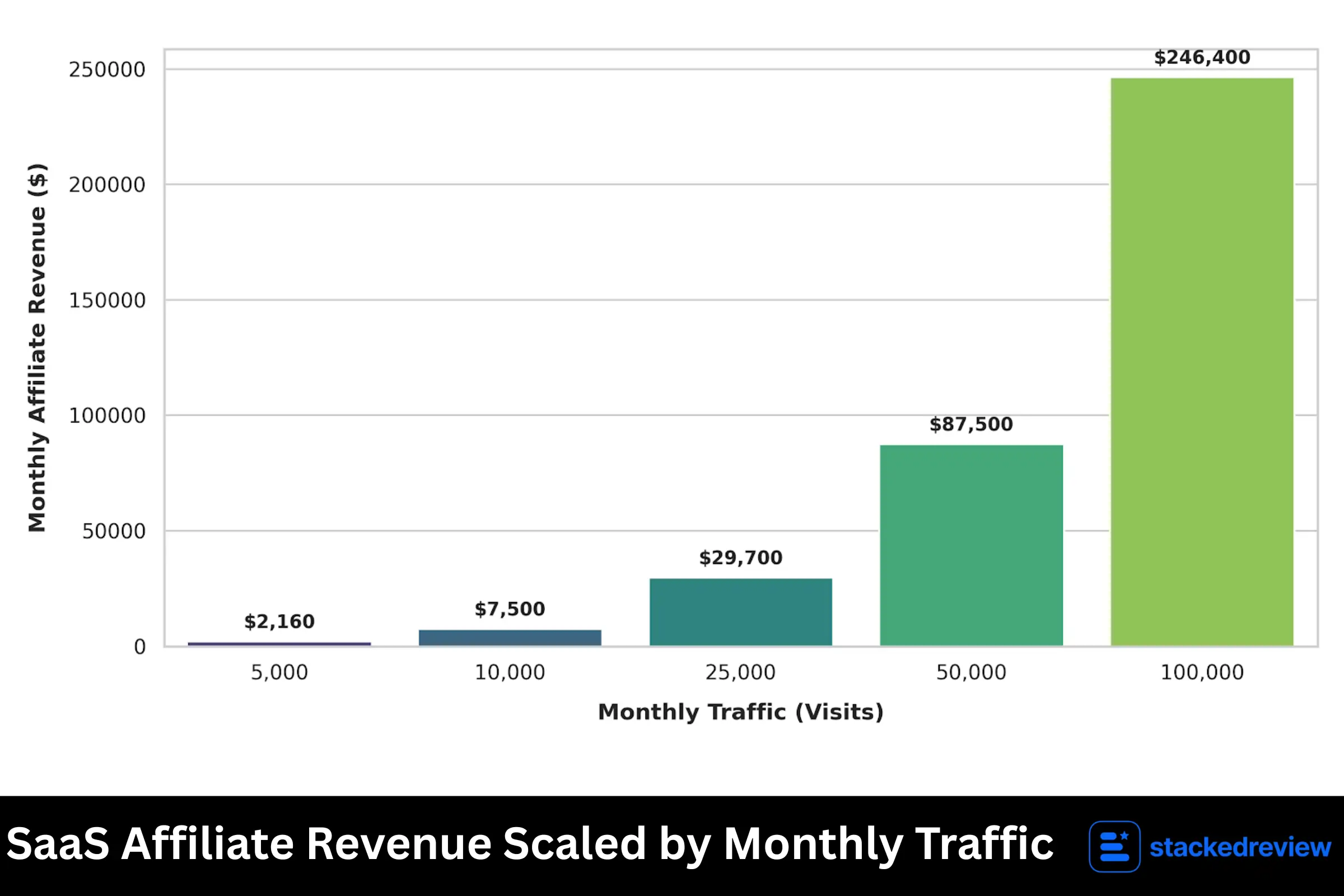
Let’s keep it simple. A review page with 10,000 monthly visits can do very different numbers based on intent. A “best CRM software” page may bring fewer clicks than a coupon page, but buyers can carry more value.
| Monthly visits | Affiliate click rate | Paid conversion from clicks | Customer value to affiliate | Monthly affiliate revenue |
|---|---|---|---|---|
| 5,000 | 18% | 2% | $120 | $2,160 |
| 10,000 | 20% | 2.5% | $150 | $7,500 |
| 25,000 | 22% | 3% | $180 | $29,700 |
| 50,000 | 25% | 3.5% | $200 | $87,500 |
| 100,000 | 28% | 4% | $220 | $246,400 |
Those are StackedReview modelled numbers for 2026 content planning. Real results can be lower or higher based on niche, SERP intent, offer trust, brand pull, and pricing page quality.
The key point: affiliate conversion rate matters more than raw traffic. A 3% paid conversion on 10,000 targeted visits can beat a 0.3% conversion on 100,000 random visits.
SaaS buyers also need more trust than impulse shoppers. They need demos, feature proof, pricing clarity, use cases, screenshots, comparisons, and honest limits.
That makes review content more valuable. A bland 800-word listicle will struggle. A hands-on review with pricing, screenshots, pros, cons, alternatives, and use-case match has a better shot.
Best SaaS Affiliate Niches By Numbers
Not every SaaS niche pays equally. Marketing tools often convert well because affiliates use them daily. CRM and sales tools can pay more but need longer buyer journeys.
AI tools are hot in 2026. AI-native SaaS application spend rose 108% year over year, and artificial intelligence became the fastest-growing application category in 2025, with app count growth of 181% inside portfolios.
That means AI SaaS affiliate programmes deserve special focus. But higher demand also means more copycat reviews and harder SERPs.
| SaaS niche | 2026 money signal | Affiliate angle |
|---|---|---|
| AI tools | AI-native SaaS spend up 108% year over year | Reviews, use cases, prompts, tool stacks |
| Marketing software | Common commissions often land around 20% to 40% | SEO, email, funnel, CRO comparisons |
| CRM and sales tools | Some programmes offer recurring or fixed payouts | “Best CRM for X” and “Tool A vs Tool B” |
| Forms and workflow tools | 30% recurring exists in known SaaS offers | Templates, automation guides, business use cases |
| Landing page tools | Up to 35% recurring appears in public SaaS programme lists | CRO guides, funnel builds, lead gen |
| Email platforms | Tiered recurring rates can reach 40% in selected programmes | Creator newsletters, ecommerce flows, automation |
| No-code and low-code tools | 75% of new applications were expected to use low-code or no-code by 2026 | Tutorials, templates, “build X without code” guides |
AI has another hidden angle: tools are easier to demo. Affiliates can show real output, test limits, compare speed, and share workflows.
SEO tools remain strong because buyers search before purchase. “Best SEO tools”, “Semrush alternatives”, “Ahrefs vs”, and “rank tracker software” all sit close to buying intent.
Email tools also suit affiliates. Creators, coaches, bloggers, ecommerce sellers, and agencies need them. Recurring plans make them attractive for long-term income.
SaaS Buyers Still Trust Affiliate Paths
Affiliate marketing works because buyers already shop through partner-led paths. Cashback and coupon behaviour may look B2C, but it proves one thing: users accept affiliate-led buying.
Around 57% of consumers have purchased through cashback or reward affiliate sites, while 41% have purchased through coupon sites. Another reported number shows 71% of consumers spend the same or more when buying through affiliate outlets compared with other online shopping paths.
That matters for SaaS because buyer trust has shifted. Users do not always believe brand pages. They want “what actually works” from people who tested tools.
For SaaS, trust signals include:
The best software as a service affiliate programme pages in 2026 will not read like sales pages. They will read like buyer help.
Affiliate content also supports sales teams. A prospect may read three third-party reviews before booking a demo. A good partner page can warm that lead before sales gets involved.
Search And AI Overviews Changed The Game
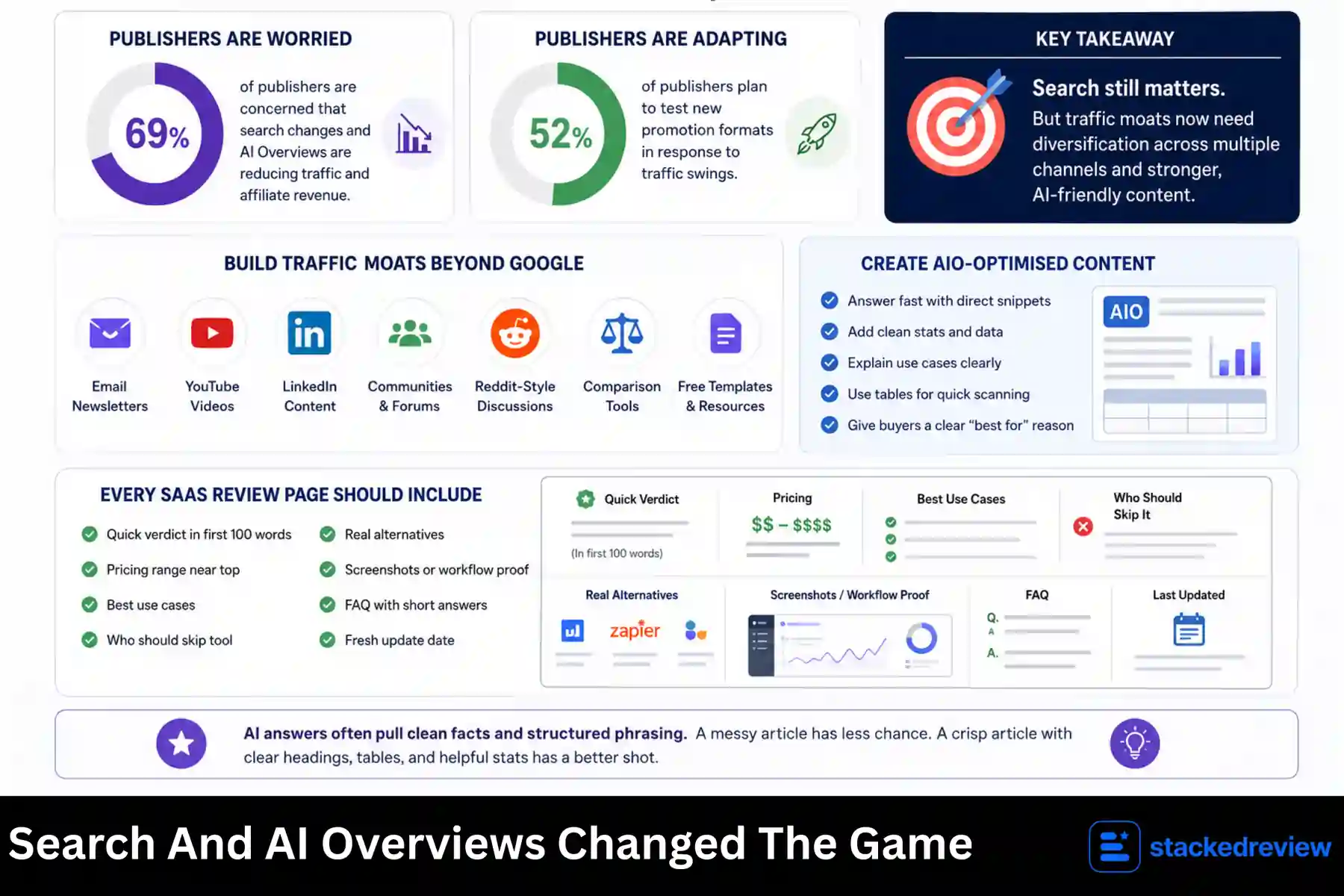
Search volatility now hits affiliate publishers harder. About 69% of publishers are concerned that search changes and AI Overviews are reducing traffic and affiliate revenue.
At the same time, 52% of publishers plan to test new promotion formats in response to traffic swings. That means 2026 SaaS affiliates need more than Google rankings.
Search still matters. But traffic moats now need email, YouTube, LinkedIn, communities, Reddit-style discussions, comparison tools, and free templates.
AIO optimised content should answer fast. Use direct snippets. Add clean stats. Explain use cases. Include tables. Give buyers a clear “best for” reason.
SaaS review pages should also include:
AI answers often pull clean facts and structured phrasing. A messy article has less chance. A crisp article with clear headings, tables, and helpful stats has a better shot.
SaaS Affiliate Benchmarks Brands Should Watch
Brands often obsess over affiliate count. Bad move. A programme with 500 inactive partners can lose to a programme with 30 serious publishers.
Better numbers matter. Track active partners, clicks, trial starts, demo bookings, paid conversions, approval rate, churn, and lifetime revenue.
The average B2B SaaS company churns 3.5% of customers every month, while annual churn can sit near 35% in broad benchmarks. Referral CAC has been benchmarked near $150, compared with $1,200 across all channels in one B2B SaaS benchmark set.
That is a big reason partner channels get attention. Lower acquisition cost gives SaaS brands more room to pay good affiliates.
| Metric | 2026 benchmark number | Why it matters |
|---|---|---|
| Average B2B SaaS monthly churn | 3.5% | High churn cuts recurring commission value |
| Broad annual churn benchmark | Around 35% | Retention decides real LTV |
| Average CAC across channels | $1,200 | Sets upper limit for partner payout |
| Referral CAC benchmark | $150 | Shows why partner-led growth can win |
| Minimum LTV:CAC target | 3:1 | Keeps growth sane |
| Strong LTV:CAC target | 5:1+ | Leaves more room for affiliate payouts |
SaaS partner programme managers should share numbers with top partners. Affiliates improve when they know best converting pages, regions, plans, and use cases.
But do not overload partners with 20 dashboards. Give them simple assets: best keywords, best landing pages, top objection answers, updated pricing, and working creatives.
A programme wins faster when affiliates know what to sell and who to avoid.
The Recurring Revenue Maths Affiliates Love
Recurring revenue is the sweet candy in SaaS affiliate marketing. It makes one sale worth more than the first payment.
Here’s easy maths.
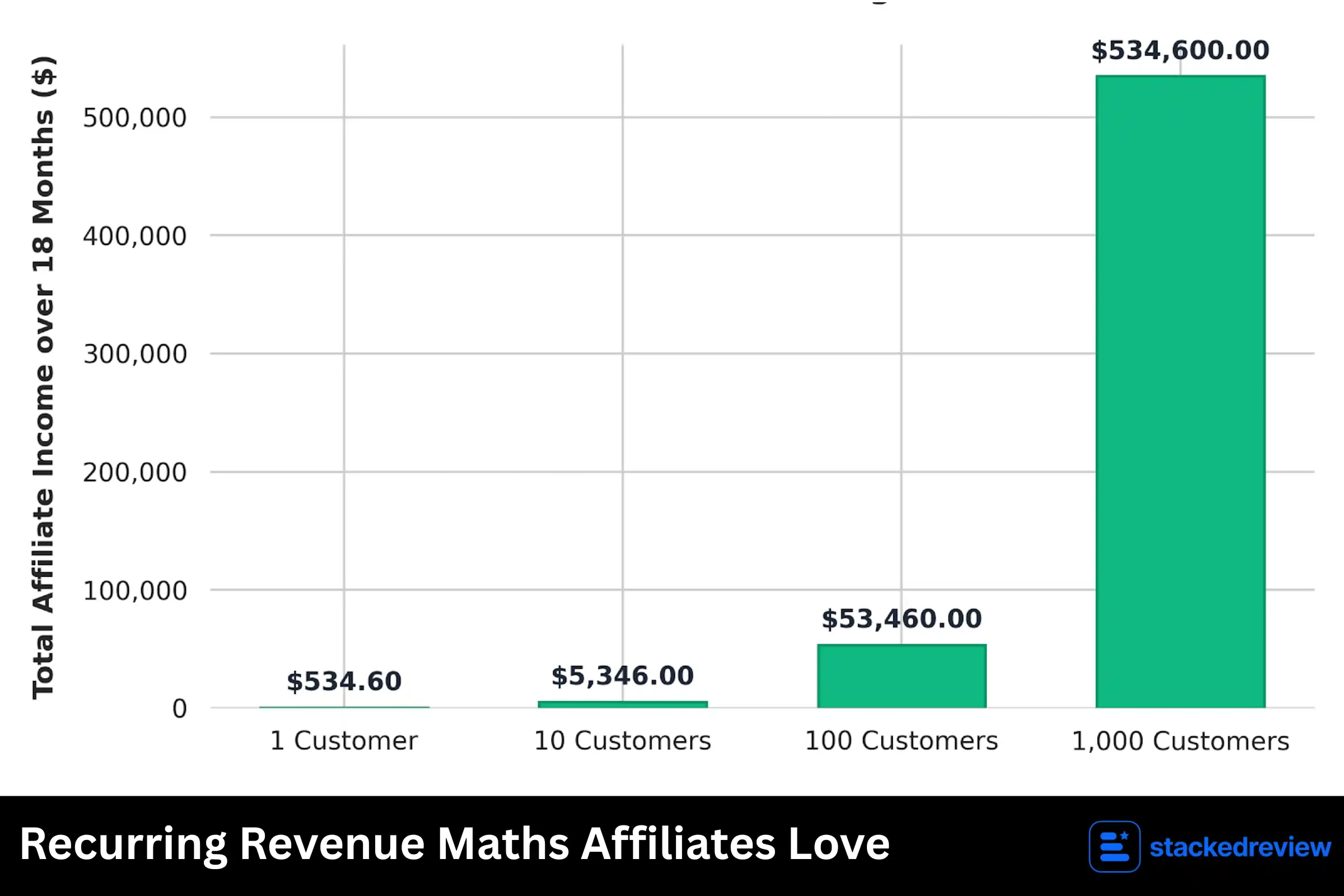
A tool costs $99 per month. Affiliate commission sits at 30%. One active customer gives $29.70 per month. If an average customer stays 18 months, one sale can produce $534.60 in affiliate income.
Now scale that.
Ten customers can become $5,346 over 18 months. One hundred customers can become $53,460. One thousand customers can become $534,600.
That is why recurring commission SaaS offers attract bloggers, YouTubers, newsletter owners, agencies, and paid media buyers.
But recurring commission has one enemy: churn. If customers cancel after two months, affiliate income drops fast.
So affiliates should judge programmes using:
Top SaaS Affiliate Content Formats In 2026
Some content formats convert better because they match buyer intent. “Best” pages work well, but they are crowded. Alternative pages can bring sharper intent.
SaaS review content should mix stats, proof, and quick judgement. Readers do not want a brochure. They want help choosing.
Best content formats for 2026:
Comparison pages usually convert well because users already know at least one product. Alternative pages also work because people search them when unhappy with price, support, or missing features.
Tutorials can convert too. A guide like “how to automate invoices” can recommend billing SaaS naturally.
List posts still work, but only when they have real selection rules. A list of 50 random tools looks lazy. A list of 7 tools with real use cases can sell better.
SaaS Affiliate Programme Data Brands Should Publish
SaaS brands often hide too much. Affiliates need numbers before they commit traffic.
A good programme page should publish commission, cookie length, payout terms, approved traffic rules, best regions, and average conversion range if available.
Known SaaS affiliate examples show 30% recurring, fixed payouts, 60-day cookies, 90-day cookies, 120-day cookies, and even 180-day cookies across public programme lists. Some listed programmes show 30% recurring, 35% recurring, 50% recurring, and 40% tiered recurring rates.
That proves one thing: partner terms vary a lot. Affiliates compare them before joining.
A strong affiliate tracking software setup also matters. If tracking breaks, top affiliates leave.
Brands should publish:
Affiliate managers should also give partners monthly numbers. Not a 40-page report. Just what helps them earn more.
That can include the top landing page, highest EPC keyword cluster, best converting country, and best plan by conversion rate.
What 2026 Means For SaaS Affiliate SEO
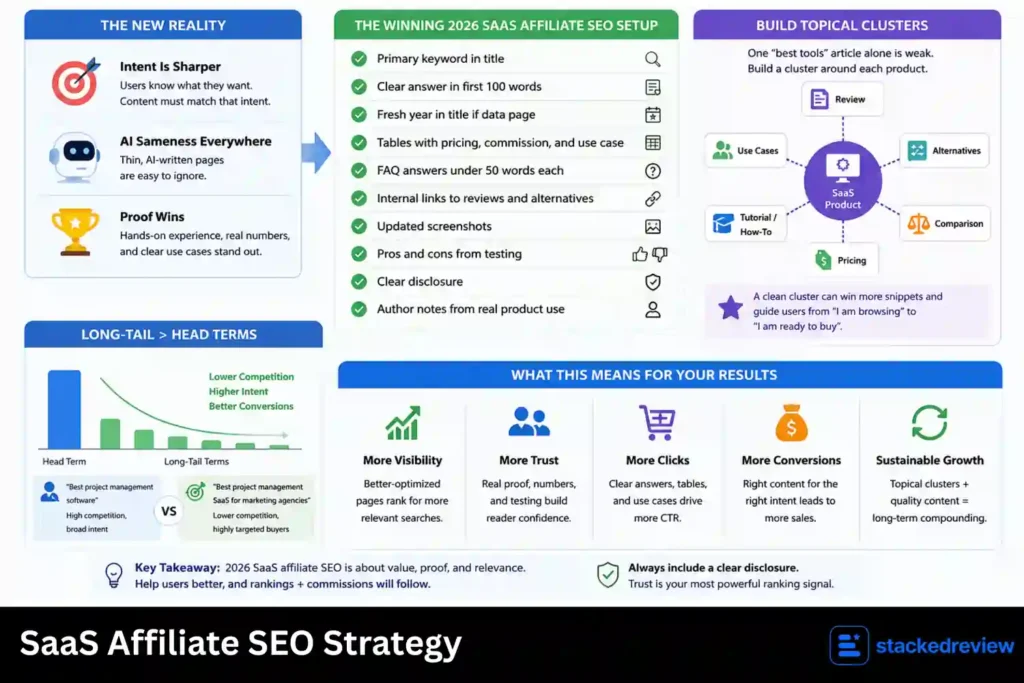
SEO for SaaS affiliate sites now needs sharper intent. Thin pages are easy to ignore. AI-written sameness is everywhere.
The winning pages have hands-on proof. They show who each tool suits. They also include numbers readers can scan.
The best 2026 SaaS affiliate SEO setup should include:
SaaS affiliate SEO needs topical clusters. One “best tools” article alone is weak. Build review, alternative, comparison, pricing, tutorial, and use-case pages around each product.
A clean cluster can win more snippets. It also helps users move from “I am browsing” to “I am ready to buy”.
Do not chase only head terms. Long-tail searches can convert better. “Best project management SaaS for marketing agencies” can beat “best project management software” on buyer fit.
StackedReview 2026 SaaS Affiliate Playbook Numbers
Here are working numbers we would use before building a SaaS affiliate campaign in 2026.
Aim for 20 to 40 target keywords per product cluster. Build one main review, one comparison, one alternatives page, one pricing explainer, and three to eight use-case pages.
For email, promote one SaaS tool every 3 to 5 useful emails. Hard selling every email burns trust.
For YouTube, one strong tutorial can beat five generic review videos. Show setup, limits, and final result.
For paid search, avoid brand bidding unless programme rules allow it. Many SaaS brands block it. Even when allowed, margins can get tight fast.
Useful 2026 targets:
SaaS moves fast. Pricing changes. AI features change. Commission rules change. Old screenshots can kill trust.
Refresh pages often. Add new numbers. Remove dead claims. Test CTAs. Track click depth.
What SaaS Affiliates Should Avoid In 2026
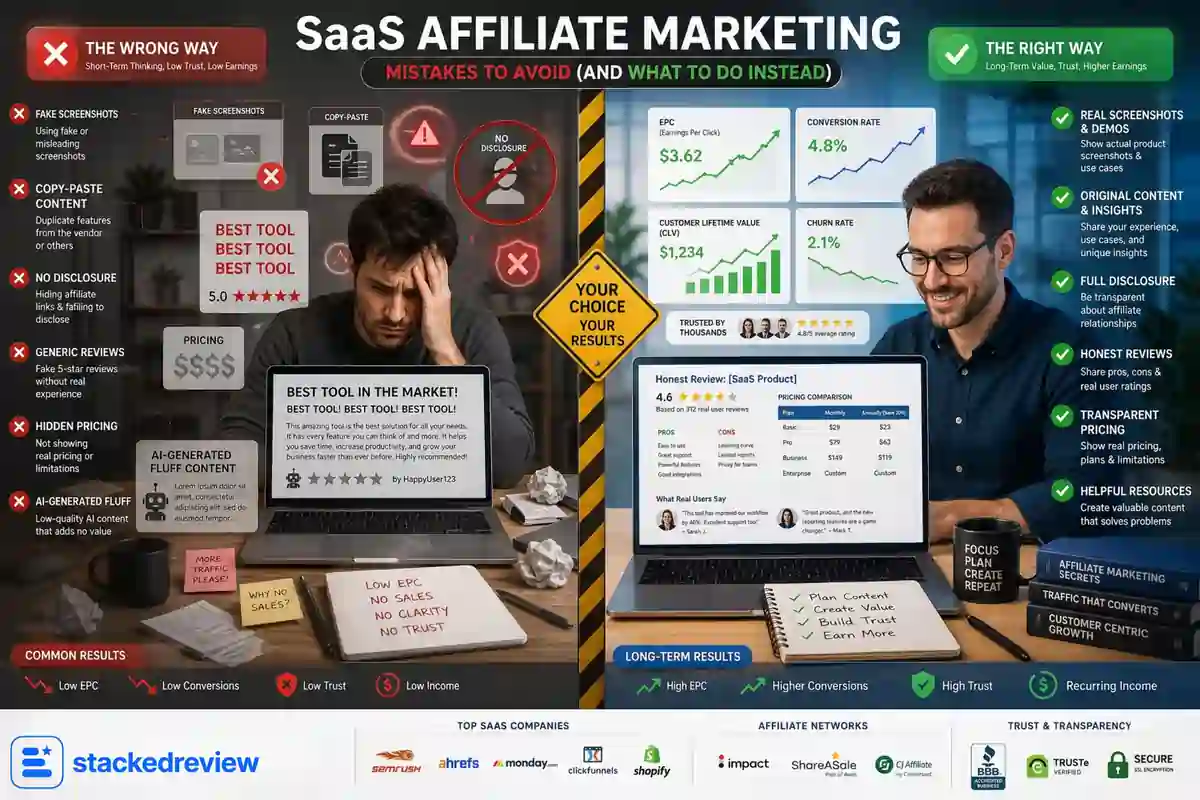
Bad affiliate content still ranks sometimes, but trust drops fast. Readers can smell fake reviews.
Avoid:
Also avoid chasing only commission size. A 70% payout sounds fun, but weak conversion can still pay peanuts.
Check EPC first. Then check the conversion rate. Then check churn. Then check the commission.
A smart affiliate looks at lifetime value, not only first sale. Customer lifetime value decides real earnings in recurring SaaS.
SaaS Affiliate Marketing Statistics 2026: Extra Numbers Worth Using
Here are more stats you can use across content, decks, and partner pages.
AI-native application spend rose 108% year over year. Large enterprises saw AI-native app spend rise 393%. Average organisations spend $1.2 million on AI-native applications.
Eight of the top 50 most expensed applications are AI-native, making up 16% of that group. Also, 60% of IT leaders say they lack visibility into all generative AI tools in use.
That creates a strong content angle for affiliates. Buyers need help choosing fewer, better tools.
Low-code and no-code also matter. By 2026, 75% of new applications were expected to be built using low-code or no-code technologies.
Cloud adoption supports SaaS buying too. Paid cloud usage among EU enterprises reached 52.7% in 2025.
North America stays huge. Around 17,000 SaaS companies operate in the US, with about 2,000 in Canada.
Vertical SaaS has its own pull. One 2026 industry report lists 685+ vertical SaaS companies with about 41,100 professionals.
That gives affiliates more micro-niches. Instead of “best CRM”, try “best CRM for dental clinics” or “best CRM for B2B agencies”.
Final Words
SaaS affiliate marketing in 2026 rewards people who test tools, show numbers, and send buyers with real intent. SaaS affiliate marketing statistics 2026 make one thing clear: bigger SaaS spend, higher partner budgets, and recurring commissions create a strong opening for serious publishers.
Do not chase every programme.
Pick tools users keep, build content with proof, track EPC properly, and update winning pages often. That is where long-term SaaS affiliate revenue gets fun.
Sources Used
- Statista SaaS market data
- Fortune Business Insights SaaS market report
- Zylo SaaS statistics 2026
- GrowSurf affiliate programme benchmarks 2026
- wecantrack SaaS affiliate marketing statistics
- Jotform SaaS affiliate programme examples
- Saleshandy SaaS affiliate programmes
- StartUs Insights SaaS industry report 2026

Affiliate Disclosure: This post may contain some affiliate links, which means we may receive a commission if you purchase something that we recommend at no additional cost for you (none whatsoever!)
Similar Posts






Verification process
Editorial standards
We’re a team of real users — not bots, not press-release copiers. Here’s exactly how we earn your trust on every single post.
We Actually Buy the Products
Every deal on this site is tested with a real purchase using our own accounts. We don’t rely on screenshots sent by vendors or press kits. If we say the discount works, we’ve clicked through checkout ourselves.
No Pay-to-Rank Policy
We never accept payment to feature or rank a deal higher. Affiliate commissions don’t influence our editorial scores — a bad deal stays ranked low regardless of commission size.
Monthly Re-Verification
Pricing changes fast. Our team re-tests every published deal at least once a month and immediately updates or removes any that have expired, changed, or been capped.
Expert Editorial Team
Our writers and editors have collectively spent 40,000+ hours hands-on with digital tools. We know what a fair price looks like — and we call out bad deals even when they’d earn us commissions.
Transparent Scoring Criteria
Every score is calculated from a public rubric: discount value, feature-to-price ratio, redemption ease, plan flexibility, and competitor comparison. No hidden weighting, ever.
Reader Feedback Loop
Thousands of readers report broken deals each month. Our team investigates every report within 24 hours and updates the page the same day a deal stops working.
Jaclyn Donaldson
Jaclyn is a content strategist at StackedReview with a passion for empowering small businesses. She specializes in dissecting social media advertising costs and hunting down the best-value deals. Her goal is to help brands stretch their budget further without compromising on results.